 UAE
UAE
 KSA
KSA
Product Updates
Why UAE Businesses Should Automate End-of-Service Benefit Calculations
September 19, 2026
Introducing QuickDice ERP - The Premier Accounting Solution for UAE Businesses with Exceptional Results!
What Are the Common Challenges Faced by Manpower Rental Companies

Table of Contents
Manpower rental companies manage recruitment, workforce availability, client requirements, payroll, attendance, compliance and employee expectations simultaneously. Understanding the challenges faced by manpower rental companies helps businesses identify operational gaps and improve workforce management. The Manpower Rental Management Software can make repetitive processes easier, enhance data visibility and facilitate quicker workforce coordination.
With the increase in competition manpower providers are forced to ensure that they have reliable staffing at a low cost and service quality. Quickdice ae has the potential to assist companies to simplify workforce management by using digital tools. Efficiency can be enhanced through strong recruitment, scheduling, compliance, payroll and employee engagement practices which can assist in sustaining business growth and enhancing client relations.
A manpower rental firm hires, employs and provides manpower to the client companies based on their manpower needs. It can also deal with the hiring process, contracts, payroll, attendance, benefits, compliance and administration of workers, as clients utilize the workers to conduct agreed operations.
These businesses normally determine the workforce needs of clients, recruit appropriate candidates, carry out the recruitment and onboarding process, deploy employees to the workplace, track attendance, payroll, and maintaining employee records. Constant planning of the clients, employees, recruiters, and administrators is a necessity.
Manpower rental services are used by businesses that require the flexibility to access workers without the need to handle all the administrative functions at the employment level. These services may assist companies to react to seasonal demand, project needs, shortages in the workforce or varying operational needs with greater efficiency.
Hiring skilled employees may be a challenge where multiple employers are fighting over the same talent. Manpower providers need to find the right candidates within a short time frame and still achieve quality. Retention can be enhanced by offering competitive remuneration, effective communication, career and supportive work environments.
High turnover may interfere with the operations of the clients, escalate recruitment costs and strain the administrative departments. Workforce continuity is also impacted by frequent changes of employees. Effective onboarding, frequent interaction, prompt and prompt feedback systems can serve to assist businesses to know employee issues and enhance retention.
The demand on the client workforce is subject to rapid change due to new projects, seasonal demand, business growth or unexpected workforce shortages. The challenges faced by manpower rental companies increase when available workers do not match changing demand. Response can be enhanced through workforce forecasting, talent pools and flexible scheduling.
Manpower providers should handle the employment documentation, contracts, working hours, wages, benefits, leave and safety requirements as well as other requirements. Lack of compliance may pose a risk to finances and operations. The fact that you keep up-to-date records, defined procedures, review it regularly, and document it well assists in the management of compliance.
Payroll is complicated when organizations have many employees with varying payrolls, allowances, overtime benefits, deductions, leave benefits and client assignments. Calculations can be done manually which may result in more errors and delays. Normalized payroll procedures and precise employee records can serve to guarantee that employees are paid right and right on time.
Manpower providers must make sure that workers fulfil the expectations agreed at the worksites of the clients. Low productivity may impact on service quality, and customer relations. Responsibilities, performance measures, frequent feedback, training and worker-supervisor communication can be used to enhance performance of the workforce.
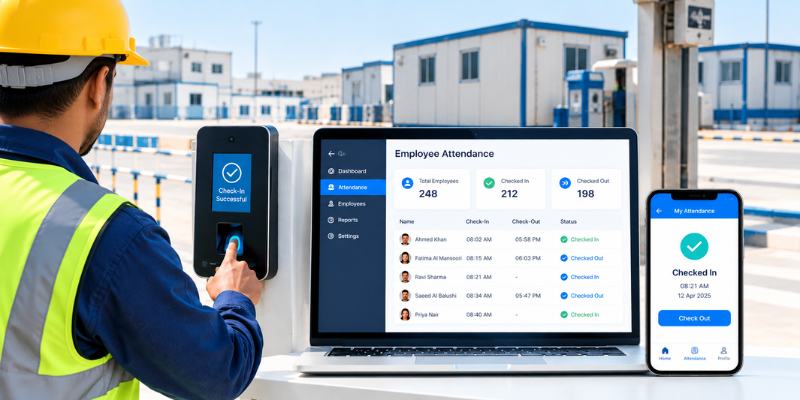
Where employees work in various locations or are on different shifts it becomes difficult to manage attendance. Absence, late arrival and schedule variations and overtime should be properly monitored. Centralized scheduling and automated attendance records can eliminate administrative work and give a better insight into the availability of workforce.
Manual processes such as screening candidates, collecting documents, verifying, contracts, orientation and assignment can overwhelm teams due to the large numbers of recruitments required. The challenges faced by manpower rental companies become more noticeable as workforce volume grows. Digital records and standardized workflows can enable quicker and more uniform high volume onboarding.
Clients demand workers to be time conscious, have the right skills and adhere to requirements in the workplace and be available when required. Poor communication on the number or role of the workforce can influence satisfaction. Constant communication, service tracking, explicit contracts and quick resolution of problems contribute to good working relationships.
Margins can be decreased by recruitment costs, salary, transportation, administration, compliance, technology, training and cost of replacement of employees. To determine the inefficiencies, companies must be able to see the precise expenditure on operations. Monitoring of costs, planning of workforce, automation and productivity analysis can be used to support healthier margins without compromising service quality.
Digital recruiting processes streamline the applications, screening, documents, approvals and onboarding activities under a single location. Automation eliminates redundant administrative tasks, accelerates the candidate processing, decreases errors, and establishes uniform recruitment practices of various jobs and client needs.
Technology in workforce management consolidates the employee data, assignments, schedules, attendance, availability and performance data. Managers can see more easily throughout dispersed teams, and can effortlessly recognize staffing needs, organize workers and make informed choices with recent workforce data.
Employee records are automated to connect with attendance, overtime, leaves, allowances and payroll calculations. This minimizes manual data entry, enhances payroll accuracy, facilitates uniform processing, and simplifies access to key employment records when conducting compliance reviews.
Technology eases the scheduling of shifts, time tracking, absences, overtime management and schedule changes. Managers can detect attendance issues fast, distribute the number of workers available, minimize scheduling issues, and enhance communication among the workers, coordinators, and the client locations.
The workforce analytics determine trends in turnover, absenteeism, recruitment, overtime, productivity, and staffing requirement. The insights can be used by managers to predict needs, detect recurrent workforce issues, resource allocation, and improve the decision-making process of operations.
Having an active talent pool can assist companies to react promptly to staffing needs by the clients. Arranging candidates according to skills, experience, availability, location, and certifications helps recruiters to find the right workers quickly without going through the sourcing process again.
Unified recruitment and onboarding process decreases discrepancies and time delays. Screening, documentation, approvals, training, orientation and assignment steps can be defined with clear workflows and adhered to by recruitment teams in managing large numbers of employees.
Digital employees tools unite the recruitment, employee management, attendance, scheduling, payroll and reporting. Investment in appropriate technology will lessen redundant data entry, enhance the visibility of operations, and provide managers with accurate information to make daily decisions and plan workforce.
Compliance should be a part of daily workforce management in the business. Employee records should be kept accurately, the relevant requirements reviewed and documented procedures, regular checks, and clear responsibilities will help to minimize administrative loopholes and ensure a consistent adherence to regulations.
Employee engagement can be reinforced by effective communication, recognition, support, fair employment practices, and development opportunities. Frequent feedback assists in getting warning signs at an earlier stage and training and career prospects can persuade the experienced employees to stay with the organization.
Turnover, absenteeism, time spent recruiting, onboarding, overtime, payroll accuracy, productivity, complaints, and utilization of the workforce are some of the areas that businesses should monitor. Periodically reviewing these metrics assists the managers to spot trends, solve issues and enhance workforce performance.
Appropriate tasks, good schedules, adequate support and quantifiable expectations can enhance productivity of employees. Enhanced workforce visibility also assists the managers determine the underutilized workers, deal with performance issues and assign the workers as per the operational needs.
Improper recruitment, onboarding, communication, engagement, and support of employees can decrease unnecessary departure. Reduced turnover saves replacement costs, builds fewer bridges to workforce, enhances employee relationships and assists manpower providers to have reliable sources of skilled employees.
Client satisfaction is enhanced by reliable staffing, proper communication, replacements and regular service. Understanding workforce requirements and resolving staffing issues quickly helps providers build trust while supporting clients ongoing operations and changing workforce needs.
Well-organized procedures and proper documentation of employees simplify the task of the workforce. Early detection of missing information and gaps in procedures can assist businesses in minimizing unnecessary administrative problems and have a more cohesive employment and compliance regimen.
Automation minimizes redundant administrative processes of recruitment, attendance, scheduling, payroll and reporting. Employees are able to devote less time to key-pad or to reconcile data and more time to coordination of workforce, communication, problem-solving as well as critical work related tasks.
Profitability can be enhanced through efficient workforce planning, reduced turnover, higher productivity, reduced administrative expenses and better client retention. Addressing the challenges faced by manpower rental companies helps create predictable operations and sustainable business growth.
Manpower rental businesses must balance employee needs, client expectations, compliance responsibilities, workforce availability, and financial performance every day. The challenges faced by manpower rental companies can become more complex as workforce numbers, its location and the demands of the clients grow. Excellent recruitment practices, proper payroll, sound attendance records, effective scheduling, employee involvement, and regular compliance measures can enable organizations to develop a more stable operating model.
Technology can further strengthen these processes by connecting workforce information and reducing repetitive administration. Companies that merge straightforward procedures with workforce data, as well as automation, have the ability to react quicker, manage expenses, and provide reliable service. Making improvements on the areas of weaknesses in operations will allow manpower rental companies to enhance productivity, employee retention, client relationship, and long-term profitability.
Frequently Asked Questions
1. What are the biggest challenges faced by manpower rental companies?
Ordinary pitfalls include recruitment, staff turnover, compliance, payroll, attendance, scheduling, productivity and client management.
2. What are the common payroll challenges in manpower rental?
The most frequent are the payroll mistakes, overtime, deductions, leaves, and late payrolls.
3. How can technology help manpower rental companies?
Technology is able to automate the recruitment, attendance, scheduling, payroll, compliance, reporting, and workforce management.
4. How can manpower rental companies improve workforce productivity?
They are able to enhance productivity by scheduling, training, tracking of performance, communicating and assigning the workers accordingly.
5. How can manpower rental companies reduce employee turnover?
Onboarding, employee engagement, competitive practices, frequent feedback, training, and career opportunities are better ways to reduce turnover.
6. What should companies consider when choosing a manpower rental provider?
Firms should focus on quality of workforce, compliance, reliability, responsiveness, experience, technology and general service value.