Introducing QuickDice ERP - The Premier Accounting Solution for UAE Businesses with Exceptional Results!
QuickDice Accounting Software UAE brings daily finance into one connected system — from bookkeeping, ledgers, receivables and payables to cash flow, bank accounts, cost control, financial statements and management reporting. It gives UAE businesses a clear view of financial performance without relying on disconnected spreadsheets or separate tools.
Connect accounting with sales, purchasing, inventory and projects so transactions flow into finance with less duplicate entry and better visibility across departments, branches and cost centres.
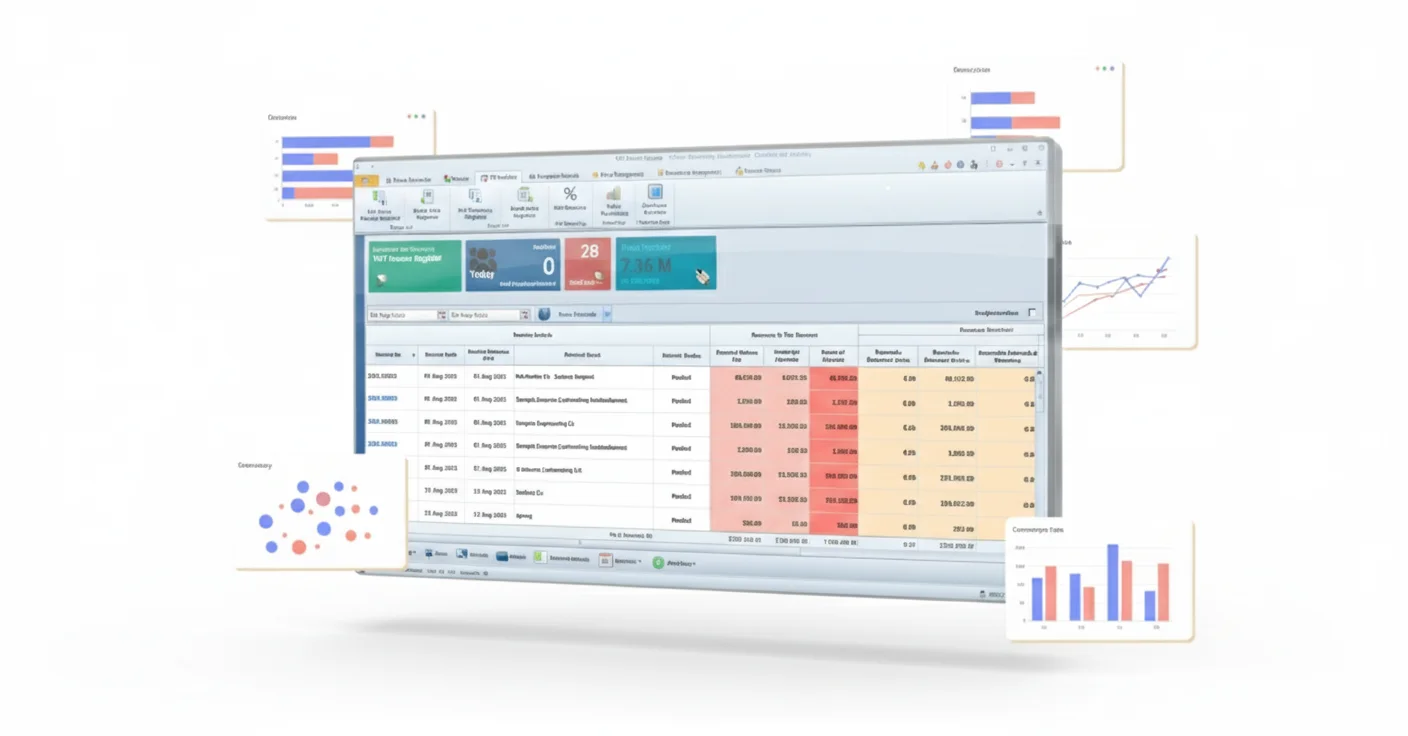
Finance teams need more than a place to enter vouchers. They need reliable books, current balances, clear receivable and payable positions, accurate cost information and reports that management can use to make decisions. QuickDice centralizes these day-to-day accounting activities in one ERP-based finance module, giving businesses a practical financial management software environment for routine accounting and management visibility.
Maintain your chart of accounts, customer and vendor ledgers, cash book, bank book, journals, sales and purchase registers, cost centres and financial statements in a structured system. Transactions from connected QuickDice modules can flow into finance, helping reduce repeated data entry and manual reconciliation.
UAE VAT-ready transaction support can be handled within the accounting workflow while the page remains focused on complete financial management. Businesses specifically evaluating approval-led tax compliance can review the dedicated FTA Approved Accounting Software UAE page for VAT and compliance-specific workflows.
When bookkeeping, receivables, payables, bank activity and management reports sit in different files, finance teams spend more time checking data and less time understanding the business. QuickDice keeps the financial picture connected in one system.
See QuickDice accounting software in actionManage the full accounting cycle with practical tools for daily entries, collections, payments, banking, cost control, financial statements and management reporting — all connected to the wider QuickDice ERP.
Maintain a structured chart of accounts, journals, ledgers and cost centres for accurate day-to-day bookkeeping. Review account activity by date range and keep financial records organized as the business grows.
Track customer balances, sales registers, outstanding amounts and ageing information from one place. Give finance teams better visibility into collections and customer account activity.
Monitor supplier balances, bills payable, purchase registers and ageing reports. Keep vendor liabilities visible and maintain clear ledger statements for payment planning and reconciliation.
Manage cash books, bank books, multiple bank accounts and petty cash from a centralized finance system. Track movements clearly and improve day-to-day control over liquidity.
Analyse income, expenses and costs by project or cost centre. Support budgeting, fund allocation and expense monitoring with clearer financial data for operational decision-making.
Generate trial balances, income statements and balance sheets for monthly, quarterly and year-end review. Use structured financial statements to monitor performance and support internal reporting.
Connect sales and purchase documents with the accounting records behind receivables, payables, customer balances and supplier balances. QuickDice supports VAT-ready transaction and invoice workflows within normal finance operations, while detailed mandate-led e-invoicing requirements remain covered by the dedicated e-invoicing solution.
Organize financial information across branches, projects and cost centres while keeping centralized visibility. Compare performance and review consolidated information from a connected accounting system.
Filter, arrange and customize reports for finance and management needs. Export accounting data in standard formats such as PDF, Excel, Word, images and CSV for review or sharing.
Standalone accounting tools can manage entries, but growing businesses often need finance to work closely with sales, purchasing, inventory, projects and operational modules. QuickDice connects those workflows so finance teams can work from a more complete and consistent set of business data.
The result is a clearer financial view, less repeated entry and better access to the information needed for cash-flow monitoring, cost control, reporting and management decisions.
| Capability | Disconnected Finance Tools | QuickDice Accounting |
|---|---|---|
| General Ledger & Books of Accounts | Records may sit across separate files | ✓ Centralized accounting records |
| Receivables & Payables | Manual follow-up across systems | ✓ Connected customer and vendor ledgers |
| Sales, Purchase & Inventory Integration | Duplicate entry and reconciliation | ✓ Data flows across connected ERP modules |
| Project & Cost Centre Tracking | Limited operational context | ✓ Project-wise and cost-centre visibility |
| Financial Statements & Reporting | Reports assembled manually | ✓ Structured reports from one system |
| Multi-Branch Financial Visibility | Separate branch files and consolidation | ✓ Centralized view across business locations |
QuickDice supports businesses that need reliable day-to-day accounting together with clearer operational and financial visibility across teams, projects, branches and transactions.
Replace scattered spreadsheets with structured bookkeeping, receivables, payables, banking and financial reports in a system that can grow with the business.
Connect purchases, sales and inventory movements with accounting so finance teams can review margins, stock-related costs, customer balances and supplier liabilities more easily.
Track project-related income and expenses, cost centres, milestone billing and financial performance while keeping project activity connected to the finance module.
Manage recurring billing, customer and vendor balances, operational expenses and financial reporting while connecting finance with rental or service workflows.
Bring financial information from multiple locations into a centralized reporting structure with branch-level visibility and consolidated management reporting.
Whether you are replacing spreadsheets or moving from a standalone accounting tool, the goal is the same: keep financial records accurate, reduce repeated work and give decision-makers a clearer view of the business.
Growing companies need accurate books and useful financial reporting without creating more manual work as transactions, customers, suppliers, projects or branches increase. QuickDice keeps core accounting activities structured while connecting finance with the wider business where needed.
For businesses comparing Accounting Software for Small Business UAE options, the priority is usually simple daily bookkeeping, clear receivables and payables, reliable bank and cash records, management reports and the ability to grow without rebuilding the finance process from the beginning. A suitable small-business accounting setup should also support controlled user access, connected invoicing and a clear path to add branches, cost centres or operational modules as the company grows.
Organize ledgers, journals, customer and vendor balances, cash, bank activity and financial statements in one structured accounting environment.
Review receivables, payables, cash flow, costs and management reports so finance information supports everyday decisions instead of remaining only in period-end files.
Add branches, cost centres, projects and connected business workflows while maintaining a consistent financial structure as transaction volume and operational complexity increase.
For businesses evaluating Cloud Accounting Software UAE, QuickDice provides cloud-based access to accounting and financial information so authorized users can work with current business data without depending on a single office computer or disconnected local files.
Businesses looking for Business Accounting Software UAE teams can use across branches need more than remote access. They also need controlled user access, consistent books, current balances and a common reporting structure. When comparing Cloud Accounting Packages or Cloud Based Accounting Packages, review user permissions, branch visibility, reporting, data migration and how accounting connects with the rest of the business—not only whether the system can be opened through a browser.
QuickDice is designed around the accounting work finance teams perform every day — setting up accounts, recording transactions, reviewing balances and producing reliable reports.
Connected ERP modules can feed relevant transactions into finance, while accountants retain the structure and reporting needed to review books, monitor performance and complete period-end work with better visibility.
Set up your chart of accounts, cost centres, branches, opening balances and financial structure to match how your business operates and reports.
Manage journals, sales, purchases, receipts, payments, bank activity and connected operational transactions while keeping customer and vendor balances current.
Monitor trial balances, cash flow, receivables, payables, costs and financial statements, then use customizable reports to support management and period-end review.
Replacing spreadsheets or an existing accounting system requires more than installing software. The finance structure, opening balances, master data, users and reporting needs should be reviewed so the new system supports accurate day-to-day work from the start.
Identify how accounts, customers, vendors, banks, cost centres, branches, reports and approvals are currently managed.
Set up the chart of accounts, financial periods, branches, cost centres, user roles and reporting structure around the way the business operates.
Plan the transfer of relevant masters, opening balances and other agreed accounting data from existing records or systems into the new environment.
Help finance users understand the configured workflows, complete checks and begin using the system for regular accounting and reporting activities.
The right accounting system should fit the way your finance team works today while giving the business room to grow. Features matter, but so do implementation, reporting, user access, branch structure and how well finance connects with the rest of the business.
When comparing the Best Accounting Software UAE businesses can use, look beyond a long feature list. Check whether the system can support your chart of accounts, receivables, payables, banking, cost centres, management reporting, multiple locations and the operational workflows that feed financial data. Before selecting an Accounting Software Company, also review implementation support, data migration, user training, response times and whether the provider can demonstrate your real finance workflow.
Confirm that ledgers, journals, receivables, payables, banking, cash, cost control and financial statements match the work your finance team performs.
Review whether the system provides the balances, ageing, cash-flow, cost and financial reports needed for both finance operations and management decisions.
Consider future users, branches, cost centres, projects and transaction volume rather than choosing only for the business size you have today.
Understand how opening data, user setup, configuration, training and connected workflows will be handled before moving away from the current system.
QuickDice supports UAE businesses that need centralized accounting across teams, branches and operational locations. The same finance structure can support growing companies operating from one office or managing activity across multiple business locations.
Dubai businesses can manage bookkeeping, customer and supplier balances, banking, costs and financial reporting while connecting finance with relevant sales, purchasing, inventory, project or service workflows.
Abu Dhabi businesses can maintain structured financial records, branch and cost-centre visibility, cash and bank activity, receivables, payables and management reporting from one connected accounting environment.
Practical answers about accounting functionality, cloud access, small-business use, migration, reporting and implementation before choosing a financial-management system.
A complete accounting setup should support day-to-day bookkeeping, ledgers, receivables, payables, cash and bank activity, cost tracking, financial statements and management reporting. The exact requirements depend on the size, structure and operating model of the business.
QuickDice is designed to support businesses that want structured accounting without relying on separate spreadsheets for every finance activity. Small and growing businesses can use the finance module for core accounting and expand connected workflows as their operational needs increase.
QuickDice provides cloud-based access to the accounting environment for authorized users. The final user structure, permissions and connected workflows should be configured according to the organization’s roles, branches and finance responsibilities.
Data migration can be planned as part of implementation. What can be moved and how it should be prepared depends on the source system, data format, data quality, opening balances, master records and the historical information the business wants available after go-live.
The accounting module supports financial organization across branches, projects and cost centres so businesses can review activity at a more detailed level while maintaining centralized management visibility.
Relevant transactions from connected QuickDice modules can flow into finance, helping reduce repeated entry and giving accounting teams better visibility into the operational activity behind financial records. Detailed inventory functionality remains within the dedicated inventory solution.
Review your current finance process, required reports, number of users, branches, cost centres, transaction volume, migration needs and any operational systems that must connect with accounting. A product demo should focus on these real workflows rather than only showing a generic feature list.
Implementation time depends on the complexity of the chart of accounts, users, branches, opening data, migration requirements, connected modules, configuration and training needs. The scope should be reviewed before setting an implementation timeline.
This page focuses on complete accounting and financial management. Businesses specifically evaluating approval-led tax compliance, VAT filing or detailed e-invoicing requirements should review the dedicated QuickDice compliance and e-invoicing solutions for those requirements.
Yes. A demo can be used to review the accounting workflows most relevant to your business, including receivables, payables, banking, reporting, branch structure and how finance connects with other QuickDice modules you may use.
See how QuickDice can bring bookkeeping, receivables, payables, banking, costs and financial reporting into one connected accounting environment for your UAE business.
Our team can review your current finance workflow and show how the accounting module connects with the parts of QuickDice you use for sales, inventory, projects, HR or rental operations.
Book a demo to explore the workflows most relevant to your business and see whether QuickDice fits your accounting and financial-management requirements.
Tell us about your business and we'll get back to you.

 UAE
UAE
 KSA
KSA