 UAE
UAE
 KSA
KSA
VAT & E-Invoicing
How Can Small Businesses Manage VAT Accounting More Efficiently in the UAE
October 10, 2026
Introducing QuickDice ERP - The Premier Accounting Solution for UAE Businesses with Exceptional Results!
What Accounting Records Should UAE Businesses Maintain for VAT Compliance?

Table of Contents
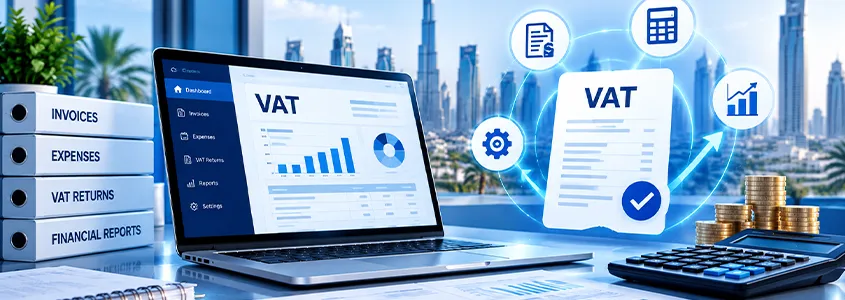
Accurate accounting records are essential for smooth VAT compliance in the UAE. To make correct returns, businesses should have solid evidence of sales, purchases, costs, and VAT calculations and adjustments. Keeping VAT Accounting Records UAE would always avoid expensive errors and simplify the financial information to look at. FTA Compliant Accounting Software is also able to further arrange transactions and reports making the regular record keeping more efficient and manageable.
Inconsistent, incomplete, or poorly structured records may complicate VAT reporting and make it more challenging to make mistakes in calculations, omissions, and unjustified corrections. Businesses are therefore advised to keep invoices, purchase record, ledgers, bank account, VAT returns, custom records, and records which prove VAT adjustments. Quickdice ae allows businesses to be systematic in their approach to recordkeeping and prepare valuable information to be reviewed or meet tax needs.
VAT recordkeeping refers to the keeping of financial and tax related records that justify the taxable transactions, VAT computation, and the returns of a business. These records reveal evidences of amounts collected, paid, adjusted and reported.
Accounting records are more extensive of the financial activity whereas VAT records are more concerned with information that is related to VAT requirements. Effective organization facilitates proper reporting, assists in the realization of discrepancies and makes necessary information readily available when necessary.
The businesses are expected to keep records of sales, purchases, expenses, adjustments, accounting transactions, bank transaction, VAT return, imports, and exports, and supporting records. The maintenance of such records will form a sound financial trail to be used in the reporting and review of VAT.
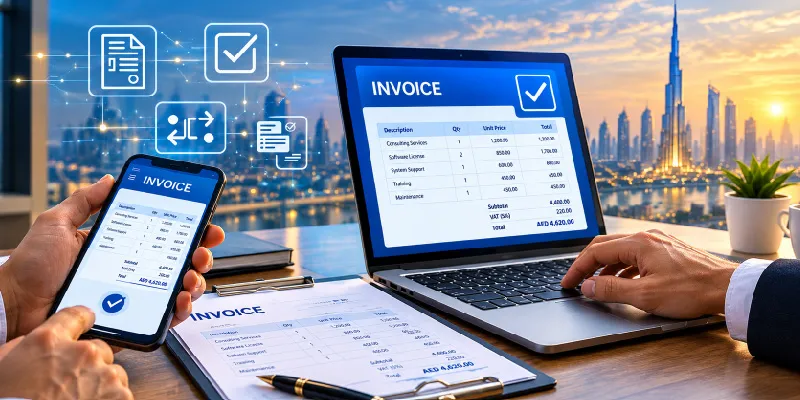
The sales invoices that would contain the dates of transactions, customer details, taxable values, the VAT rate, and totals should be retained by the businesses. VAT Accounting Records UAE must effectively relate invoices to the registered sales to enable business to verify output VAT, explore discrepancies, and justify the amounts reported in VAT returns.
Costs and input VAT claims are evidenced by purchase invoices and expense receipts. VAT Accounting Records UAE are expected to contain the details of the supplier, the date of transaction, the taxable values, and the VAT amount. Full purchase records assist companies in justifying deductions and ensuring proper recording of expenses.
The credit and debit notes record the alterations of the earlier transactions like returns, discounts or extra charges. Every amendment must be associated with its initial bill, and with explanations and new values. Good documentation, aids in keeping a comprehensible audit trail.
General ledger tracks financial transactions in the accounts of interest, and the trial balance serves to verify that accounting entries are balanced. Regular entries facilitate tracing, reviewing and reconciling of VAT related transactions prior to preparing financial statements or VAT returns.
Bank statements reflect money that has been received and disbursed via business accounts. Reconciliation records are used to reconcile such transactions with accounting entries, to enable businesses to discover missing, duplicate, or inaccurately recorded transactions before crediting a financial reporting or VAT.
Companies are advised to store the information on filed VAT returns and records of transactions to justify the reported amounts. VAT Accounting Records UAE needs to enable reported sales, purchases, output VAT and input VAT to be tracked to underlying accounting entries and supporting documents.
The import and export transactions might involve making customs declarations, commercial invoices, shipping records and other supporting documents. Businesses are expected to keep up to date documentation to justify the treatment of VAT on transactions they encounter and to prove the amounts on their books.
Proper documentation should support VAT adjustments to explain why the amount of tax or the VAT figure has changed. Businesses are advised to keep records of any invoices, credit notes, debit note, calculations etc, that will enable each modification to be well understood and assessed.
Retention of records is significant since a business might require historical record to justify the calculation of VAT, transactions, adjustments, and submitted returns. Having organized accounting records makes sure that old accounting data is accessible when needed to conduct reviews, audits, or to comply with the regulations.
Records can be more easily accessed through digital storage, and businesses must utilize secure systems, proper access controls, and routine backups. The invoices, the records of VAT and supporting documents need to be found without needless delays and historical documents must be stored in such a way that they can be read and properly organized.
The absence of invoices can complicate the process of verification of transactions and can leave the calculation of the VAT without support. To minimize gaps in accounting documentation, businesses must implement regular document collection procedures, check records on regular basis, and store supporting evidence in a structured place.
Due to duplicate entries, sales, purchases, expenses or VAT may be overstated. Businesses are supposed to check the references of transactions, dates, suppliers and numbers when doing frequent checks. Duplicate checks can also be automated to help in detecting the occurrence of duplicates prior to their impact on financial reports.
The wrong rates, manual entry errors, wrong taxable values or the inappropriate treatment of the transactions can lead to incorrect VAT calculations. Companies ought to check the calculations done against invoices and accounting related documents frequently so that mistakes can be detected before VAT amounts are contained in the returns filed.
Bank transactions that are not reconciled may signify missing records, postponements, timing variations or wrong quantities. Periodic bank reconciliation assists businesses to contrast accounting records and actual activity in the bank and enquire on variances before they give broader reporting or record keeping issues.
The variance of VAT reports and accounting records could reflect errors in classification, lack of transactions in the records, calculation errors or timing. Reports should be compared with underlying entries and unexplained differences should be investigated by businesses before completing VAT reporting.
Transactions can be wrongly handled due to the misconception regarding taxable supplies, exemption, zero rated transactions or adjustments. Companies are advised to revisit transaction classifications on a regular basis and keep supporting records in regard to the VAT treatment to be used on the material or unusual transactions.
Lack of organization complicates the process of finding invoices, receipts, statements and supporting documents. Proper filing system, naming, categorization, access control and back up can enhance retrieval and assist employees to review accounting information more effectively within reporting periods.
The accounting software is able to store sales, purchases, expenses, invoices, and other financial data in a centralized and organized environment. It is able to automate VAT calculations, organise transactions, create pertinent reports and assist with account reconciliation whilst keeping transaction history to make it easier to revise.
Such systems have the ability to minimize the repetition in entering data and simplify retrieval of records. Properly configured, accounting software can assist in maintaining a uniform record keeping, enhance transparency in transactions, and allow business to peruse VAT-related data prior to preparing or filing their returns.
Proper accounting documentation assists the UAE companies to keep good VAT reporting as well as financial control. Maintaining VAT Accounting Records UAE will enable the business to monitor the sales, purchases, invoices, adjustments, reconciliations and supporting documents clearly. Frequent reviews might also assist in determining gaps in information, miscalculations, and anomalies before they impact on VAT returns.
Businesses are expected to store invoices, transaction records, VAT statements, bank reconciliation and supporting documents in a secure place and easily accessible. Accounting software has the ability to make recordkeeping easier by automating calculation, structuring transactions, maintaining records and producing useful reports. Regular tracking aids finance teams in effectively managing VAT requirement and keeping records that may be used to ensure further compliance.
The businesses usually require appropriate invoices, transaction documents, accounting records, VAT, returns, bank accounts, and supporting documents.
VAT and accounting records that are required should be retained by businesses in the relevant statutory retention period.
Yes companies are supposed to have copies of any pertinent tax invoices and documents as necessary.
Incomplete records may complicate VAT calculations and reconciliations and verification of transactions.
Yes accounting programs can sort transactions, automate calculations, create reports and keep open histories of transactions.
VAT reports can be compared by businesses with invoices, ledgers, purchases, sales and supporting records to determine discrepancies.