 UAE
UAE
 KSA
KSA
VAT & E-Invoicing
How Can Small Businesses Manage VAT Accounting More Efficiently in the UAE
October 10, 2026
Introducing QuickDice ERP - The Premier Accounting Solution for UAE Businesses with Exceptional Results!
Common Procurement Challenges for Trading Businesses in the UAE

Table of Contents
Procurement plays a vital role in helping UAE trading businesses maintain product availability, control purchasing costs, and fulfil customer orders without unnecessary delays. Close coordination is necessary in managing the suppliers, making comparisons on the quotation, and making the proper purchases. Learning about Procurement Challenges for Trading Businesses can enable companies to determine the areas of their operations that may be improved and enhance their purchasing decisions without compromising on the health of supplier relationship and inventory quality.
With growing business demands, manual processes can create confusion, duplicate orders, and unexpected expenses. Inventory Management Software UAE can assist the business to bridge the gap between procurement and stock data, automate the purchasing process and enhance visibility. Quickdice ae enhances more aligned business processes by integrating purchasing and inventory management functionalities.
Procurement management is a process that encompasses planning, sourcing, evaluation of suppliers and acquisition of products needed in a resale or business operation. As opposed to simple purchasing, it incorporates supplier selection, cost analysis, approvals, monitoring delivery and purchasing strategy. Procurement enables trading companies to have the right inventory, manage costs and deliver demand to their customers at all times.
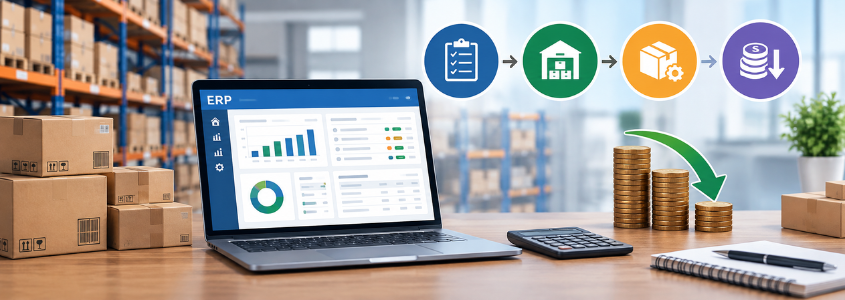
The common procurement process is as follows: Requirement, RFQ, Supplier Comparison, Purchase Order, Receipt and Inventory. Procurement needs to liaise well with the sales and inventory departments so that their purchasing decisions are based on real demand, stock and warehouses needs.
The trading companies will get a number of supplier quotations at varying prices, discounts, payment terms and delivery costs. Manual comparison of these details is confusing, costly to purchase and identification of appropriate suppliers becomes hard. Unequal comparisons may also lead to lost chances of saving.
Inaccurate product specifications, wrong quantities and duplicate requests complicate internal purchasing activities. Procurement teams cannot easily check requirements when they receive mails or messages in a scattered manner across different departments. These Procurement Challenges for Trading Businesses will be able to postpone approvals, add to administrative efforts and generate unneeded purchasing commitments.
Manual transmission of RFQs, outreach to suppliers and receiving quotations may end up being time-consuming. Lack of responses, sporadic quotation styles make comparisons difficult. In the absence of an organized procedure, procurement teams are likely to suffer as a result of delayed selection of suppliers, slower purchasing process and inconveniences in satisfying urgent stock needs.
Wrong product description, quantities, prices, supplier details and duplicate purchase orders could interfere with the procurement activities. The use of manual data input predisposes the possibility of mismatch between the approved requests and the orders issued. These errors can lead to wrong deliveries, invoices, extra costs, and unneeded administrative amendments.
In the absence of centralized procurement information, businesses are not able to determine open purchase orders, anticipated deliveries and received partially materials. The employees can make frequent calls to suppliers to get updates. The lack of visibility generates uncertainty in terms of stock coming in, makes buying difficult and exposes the company to unforeseen shortages.
Purchasing teams at times make orders that are not checked to the current stock in the warehouses. This leaves surplus inventory in some of the stores whilst there is shortage in other stores. The Procurement Challenges for Trading Businesses are even more challenging when the records of stocks are old, lost or when they are not available at the time of making buying decisions.
Trading companies often deal with many suppliers who provide various prices, payment terms, delivery schedule and specifications of the products. Keeping the suppliers information in spreadsheets and emails is a challenge to compare suppliers. Centralised supplier records assist teams to look at the purchasing history, performance as well as to have steady supplier relationships.
Delays by the suppliers in delivery may decrease inventory levels and disturb customer fulfilment time-frames. Companies can turn to emergency buying, which raises costs and impacts profitability. By keeping track of the planned delivery dates, keeping in touch with the suppliers and spotting areas likely to be delayed, the procurement teams can be ready to prepare appropriate alternatives.
Companies that have multiple warehouses, need to coordinate the purchasing needs that are spread across the warehouses. Inadequate visibility of stocks may result in orders being made twice, unnecessary moves, and imbalanced inventory. Good coordination between the warehouse managers and the procurement teams assists business in consolidating demands and distributing products based on real demand.
In the absence of credible purchasing reports, the management might find it hard to determine any changes in prices, performance of suppliers, purchasing volumes, and trends in spending. The lack of historical information complicates negotiations and diminishes buying decisions. The Procurement Challenges for Trading Businesses can be minimized by reporting the correct procurement and having the data available.
The procurement issues may raise the purchasing cost, lead to surplus stock, and stock outages that slow down customer orders. Increasing inventory levels and stocking lead to increased storage costs and additional inventory holding costs and emergency buying causes strain on cash flow. Lack of coordination between the suppliers may also ruin business relations and disrupt the day to day operations.
With procurement, inventory, sales and finance running independently, employees waste a lot of time in fixing mistakes and information tracking. These inefficiencies not only decreases productivity but also makes it difficult to carry out financial planning and also makes it difficult to respond to the changing customer demand and market conditions quickly by trading businesses.
Develop standard request forms that have specifications of the products, quantity, date of requirement, and details of approval. Regular information assists the procurement groups to check requirements, eliminate duplications, decrease purchasing mistakes, and handle departmental demands more effectively.
Develop standardized guidelines in soliciting quotations, deadline on response and comparing quotations with the suppliers. With standardized evaluation criteria, the businesses are in a position to evaluate the prices, delivery timelines, payment terms and product quality before choosing the suppliers.
Have a centralized supplier database with contact information, negotiated prices, payment terms and conditions, delivery conditions and purchase history. Organized records enhance supplier comparison, negotiations, ease of communication and enable employees to have access to reliable information within a short time.
Confirm the available stock, quantity ordered, and scheduled deliveries and balances in the warehouse before preparing purchase requirements. The coordination of procurement and inventory assists in avoiding duplication of orders, overstocking, shortages and the decisions made in purchasing are aligned with the real business needs.
Track purchase orders using the approval, supplier confirmation, dispatch, partial receipt and completion. Periodic monitoring assists the teams to detect delayed deliveries, iron out discrepancies, keep track of inventory, and remain abreast with correct data regarding pending purchasing engagements.
Periodically review purchasing volumes, performance of suppliers, change of prices, reliability in delivery, and spending patterns. Quality reports assist the management to determine areas of savings, bargain better terms, budget purchases and make decisions that are informed with historical business data.
Integrated business software links procurement to inventory and supplier records and financial data. The material request management, RFQ processing, quotation comparison features, purchase order management, and receipt tracking are some features that aid business in reducing the amount of manual work and enhancing accuracy in purchases among departments.
Inventory Management Software UAE can also assist in the multi-warehouse visibility, supplier information management, procurement reporting, and finance integration to UAE trading companies. These will assist the employees to keep track of incoming stock, organize purchasing needs, keep track of supplier commitments, and keep the information more consistent across the procurement process.
Procurement and inventory software should be considered in trading businesses where buying is dependent on spreadsheets, workers need to duplicate the same data many times, or purchase orders cannot be easily traced. Compared to the current processes, frequent quotation comparison issues and lack of access to up-to-date stock data may also be the sign that the current processes require improvement.
This need is more pronounced when the businesses have various warehouses, disconnected procurement and finance systems, or have difficulties in developing reliable purchasing reports. Software integration can aid in centralizing information, enhance coordination, and facilitate the rising operational needs without the need to depend solely on manual administration.
Procurement, suppliers, purchasing, inventory, sales, and finance are closely connected within UAE trading businesses. Depending on the enhancement of one process without synchronizing the rest of the processes may leave gaps in the operations. Handling Procurement Challenges for Trading Businesses with standardized processes, trusted supplier data and enhanced inventory visibility assists businesses in managing costs, minimizing mistakes and ensuring consistent customer satisfaction.
As operations expand integrated systems can strengthen communication between departments and provide clearer purchasing information. Companies that enhance procurement alignment have a better reaction to demand, supplier relationship management and sustainable operation efficiencies besides a greater control of their inventory and financial obligation.
Comparison of supplier prices, purchasing mistakes, delay in delivery and lack of coordination of inventory.
Compare quotes, negotiate with suppliers, and negotiate purchasing requirements.
Compare supplier price, quality, delivery time and terms of payment.
A purchase is confirmed through a purchase order whereas a quotation is requested through an RFQ.
Procurement ensures the stock is available, no shortages and the cost of inventory is controlled.
Focus on centralizing stock data and coordinate purchasing between locations of warehouses.
Integration enhances better stock visibility, accuracy of purchases and replenishment planning.
In cases where manual operation, purchasing mistakes, and isolated systems undermine the level of efficiency in operations.