FTA Approved ERP Software UAE
Best suited to businesses that need tax-ready finance connected with sales, purchasing, inventory, HR, projects, branches and operational modules in one ERP environment.
Discuss integrated ERPIntroducing QuickDice ERP - The Premier Accounting Solution for UAE Businesses with Exceptional Results!
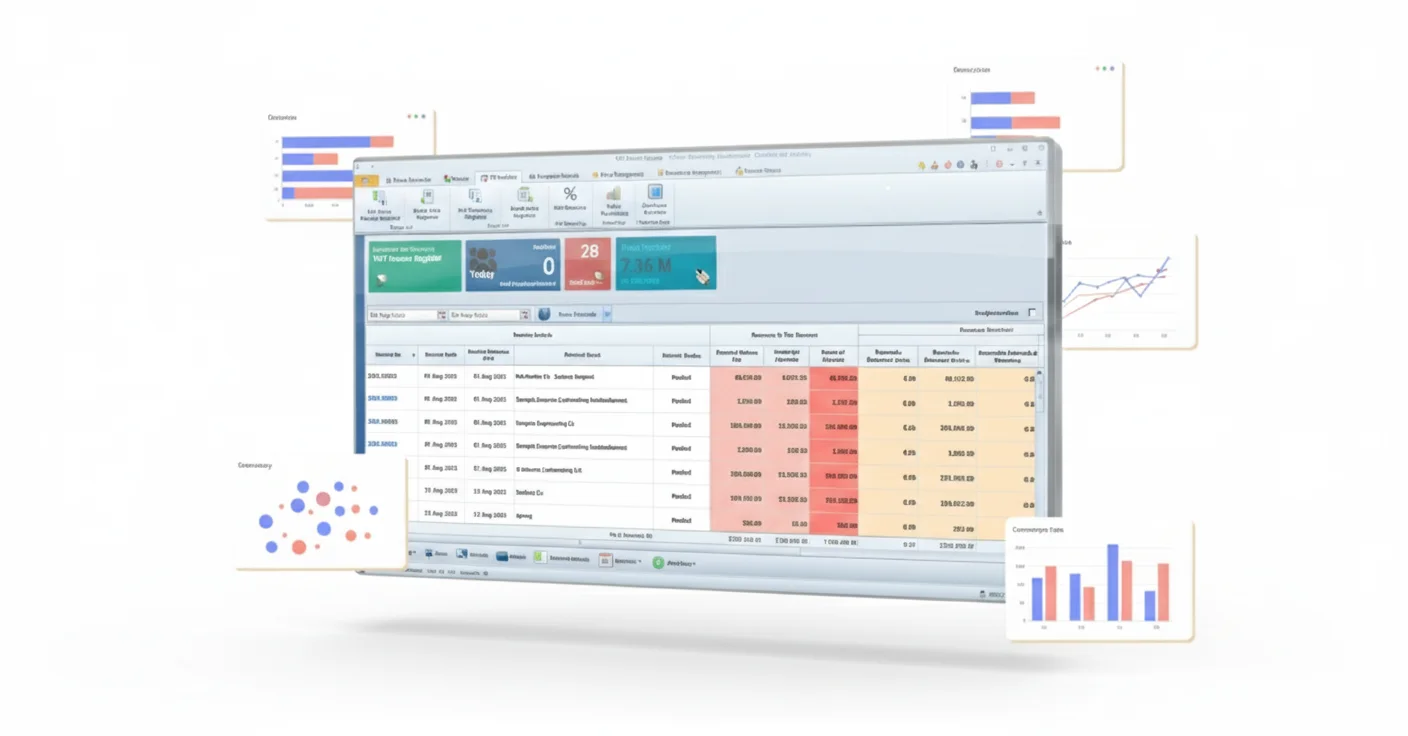
QuickDice brings FTA-approved tax accounting capability into a connected ERP environment for UAE businesses. Finance, sales, purchasing, inventory, HR, projects and operational workflows work from the same data, giving your team better control without relying on disconnected systems.
Built for businesses that need more than accounting alone, QuickDice connects day-to-day operations with VAT-ready finance, structured records and real-time reporting across departments.
A growing business needs finance and operations to work together. QuickDice connects financial records with sales, purchasing, stock, employees, projects and operational transactions so teams can work from one consistent source of information.
Instead of entering the same data in separate systems, transactions created in operational modules flow into the wider ERP workflow. This reduces duplicate entry, improves visibility and gives management a clearer view of what is happening across the business.
The FTA accreditation relates to the tax accounting capability used for compliant financial records and tax reporting. QuickDice extends that capability across a broader ERP platform so operational and financial data stay connected across the business from day-to-day transactions through management reporting.
Businesses searching for FTA Approved ERP Software usually need more than VAT-ready finance. They need sales, purchasing, inventory, projects, workforce and operational transactions to feed a controlled financial process without repeated entry across disconnected applications. QuickDice brings those workflows together while keeping tax accounting and business operations connected.
When sales, stock, projects, employees and finance are disconnected, teams spend more time reconciling data and less time making decisions. A connected ERP keeps business activity and financial control in one flow.
See how QuickDice connects your workflowsQuickDice combines tax-ready finance with operational ERP modules so business activity can move from transaction to reporting without repeated manual entry.
Maintain structured financial records, receivables, payables, ledgers, VAT-ready transactions and management reporting within the connected ERP environment.
Manage enquiries, quotations, orders, purchases, suppliers and transaction workflows while keeping the resulting financial impact connected to the wider system.
Track stock movement, availability, costing and warehouse activity with data connected to purchasing, sales and finance for better operational visibility.
Keep employee records, attendance, leave, payroll-related workflows and workforce information connected to operational and financial processes where required.
Link projects with materials, expenses, resources and billing information so management can review costs and performance without maintaining separate spreadsheets.
Connect industry workflows such as manpower, rental and other operational modules with core ERP data to keep transactions and reporting consistent across the business.
Reduce duplicate entry by allowing approved business transactions to move through connected modules instead of being recreated manually in separate tools.
Review financial and operational information through customizable reports, dashboards and exports that help decision-makers understand the business from one system.
Give authorized teams secure access to the ERP across locations while maintaining centralized records, permissions and management visibility.
Tax-ready finance works best when the business transactions behind it are connected. QuickDice links operational activity with financial records so teams can move from sales, purchasing, stock, projects and other approved transactions into accounting and reporting with less repeated work.
Sales, purchases, stock movements, projects and approved operational activities begin in the relevant ERP workflow.
Relevant transaction data moves through connected modules instead of being recreated manually in separate systems.
Financial records, VAT-related transaction data and account postings remain connected to the operational activity that created them.
Finance and management can review business activity, financial results and VAT-ready information from a more consistent data source.
A connected ERP helps reduce the gap between operational activity and financial reporting. The detailed tax accounting controls remain within the finance capability, while the wider ERP ensures that relevant business transactions can feed that process consistently.
QuickDice is designed for businesses that want tax-ready financial control without separating finance from the operational activity that creates those transactions.
| Business Need | Disconnected Tools | QuickDice Integrated ERP |
|---|---|---|
| Finance & Operations Data | Repeated entry and reconciliation | ✓ Connected workflows across modules |
| VAT-Ready Financial Records | Dependent on separate finance setup | ✓ Tax-ready accounting capability within ERP |
| Inventory, Sales & Purchasing | Separate systems and spreadsheets | ✓ Integrated operational transactions |
| Project & Resource Visibility | Manual consolidation | ✓ Connected costs, activity and reporting |
| Management Reporting | Data compiled from multiple sources | ✓ Centralized financial and operational reporting |
| Multi-Location Growth | More tools as the business expands | ✓ One scalable cloud ERP environment |
The right system should fit both your compliance requirements and the way your departments actually operate. Before choosing an ERP, review the modules you need, how transactions move between teams, how finance receives operational data and what implementation work is required to replace your current systems.
A strong UAE Tax Compliant ERP Software setup should give finance controlled tax-ready records while allowing the wider business to manage sales, purchasing, inventory, projects, workforce and other operational processes from connected workflows. The goal is not to buy every module; it is to build the right connected scope for your business.
Confirm which tax-accounting, VAT-reporting and record-control requirements apply to your finance process.
Choose the finance and operational modules your teams genuinely need instead of implementing unnecessary complexity.
Review how sales, purchases, stock, projects and other approved activity will connect with financial records.
Plan permissions, responsibilities, companies, branches and management visibility before finalizing the setup.
Identify existing data, applications and interfaces that need to move into or work with the new ERP environment.
Clarify configuration, testing, user training, go-live support and the process for future changes before committing.
Different businesses start from different problems. Choose the solution based on whether you need a connected ERP, broader financial management, tax-accounting compliance or a dedicated e-invoicing workflow.
Best suited to businesses that need tax-ready finance connected with sales, purchasing, inventory, HR, projects, branches and operational modules in one ERP environment.
Discuss integrated ERPFor businesses mainly focused on bookkeeping, receivables, payables, banking, cost control, financial statements and management reporting.
Explore accounting softwareFor finance teams focused specifically on VAT-ready accounting records, tax reporting preparation, audit trails and compliance-oriented financial controls.
Explore FTA accountingFor businesses preparing dedicated structured e-invoicing workflows, invoice exchange requirements and e-invoicing-specific integration processes.
Explore e-invoicingQuickDice is designed for organizations that need operational modules and financial control working together in one environment, rather than managing finance and day-to-day business activity in separate systems.
Connect purchasing, stock, sales and financial records so commercial activity is visible from one platform.
Bring project activity, resource usage, expenses and finance together while keeping project-specific controls connected to wider business reporting.
Connect contracts, operational transactions, assets, billing and financial reporting across recurring service workflows.
Link workforce administration and operational activity with wider business reporting where those processes need to work together.
Centralize records and reporting across locations without creating separate systems for every department or branch.
QuickDice is designed so operational activity and financial control remain connected as transactions move through the business.
Set up the finance, inventory, HR, project and operational modules your business actually needs, with users, permissions, branches and core master data.
Teams process sales, purchases, stock, workforce, projects and other approved transactions in connected workflows instead of re-entering information across separate applications.
Use centralized reporting to review financial results, operational activity and business performance with cleaner records and better management visibility.
A successful ERP rollout starts before go-live. The business processes, modules, users, data and integrations need to be reviewed so the new system reflects real operating requirements rather than simply copying old problems into new software.
Review finance, sales, purchasing, inventory, HR, project and operational workflows to define the right ERP scope.
Set up selected modules, users, permissions, branches, approvals, finance structure and reporting requirements.
Plan agreed master data, opening information and connections with any systems that need to remain part of the workflow.
Validate end-to-end workflows, train relevant users and move into live operations with the configured ERP scope.
The number of modules, users, branches, existing systems, data quality, required integrations, workflow configuration and reporting requirements all influence the implementation approach. A requirements review is the right starting point before setting a timeline or commercial scope.
Understand the difference between integrated ERP, accounting compliance and e-invoicing before deciding how your UAE business should connect operations with tax-ready finance.
Tax-accounting accreditation relates to the accounting capability used for compliant financial records and tax reporting. An integrated ERP connects that finance capability with operational areas such as sales, purchasing, inventory, HR, projects and other business workflows.
An integrated ERP is more relevant when finance depends on transactions created across multiple departments and the business wants one connected environment for operations, financial control and management reporting.
The ERP scope should be based on actual requirements. Businesses can focus on the modules and workflows that need to work together rather than implementing unnecessary functionality simply because it is available.
Relevant approved transactions can move through connected ERP workflows so finance receives the operational data needed for accounting and reporting without recreating every transaction manually in a separate system.
The ERP is designed to centralize records, users and reporting across business locations. The final structure should be configured according to your branches, entities, permissions and management-reporting requirements.
Migration can be planned as part of implementation. The approach depends on the existing systems, data quality, master records, opening information, historical requirements and which modules are included in the new scope.
Not necessarily. This solution focuses on integrated ERP operations with tax-ready financial control. Structured e-invoicing, invoice-exchange requirements and e-invoicing-specific integrations should be reviewed through the dedicated e-invoicing solution.
Timing depends on the modules, users, branches, data migration, integrations, configuration, testing and training required. A workflow and data review should be completed before committing to an implementation timeline.
List the departments you need to connect, your current systems, key workflows, number of users and branches, reporting requirements, compliance concerns and the main problems you want the ERP to solve. This makes the demonstration more relevant to your business.
Ask for a demonstration based on your real workflows. Review module fit, cross-department data flow, permissions, reporting, compliance scope, migration requirements, integrations, implementation support and how the system can expand as the business grows.
Tell us which parts of your business you need to connect. Our team can walk you through the relevant modules, workflows and reporting in a focused demonstration.
The goal is not to force every module into your business. QuickDice can be configured around the operational and financial workflows you actually use.
Tell us what you need to manage and our UAE team will contact you.