
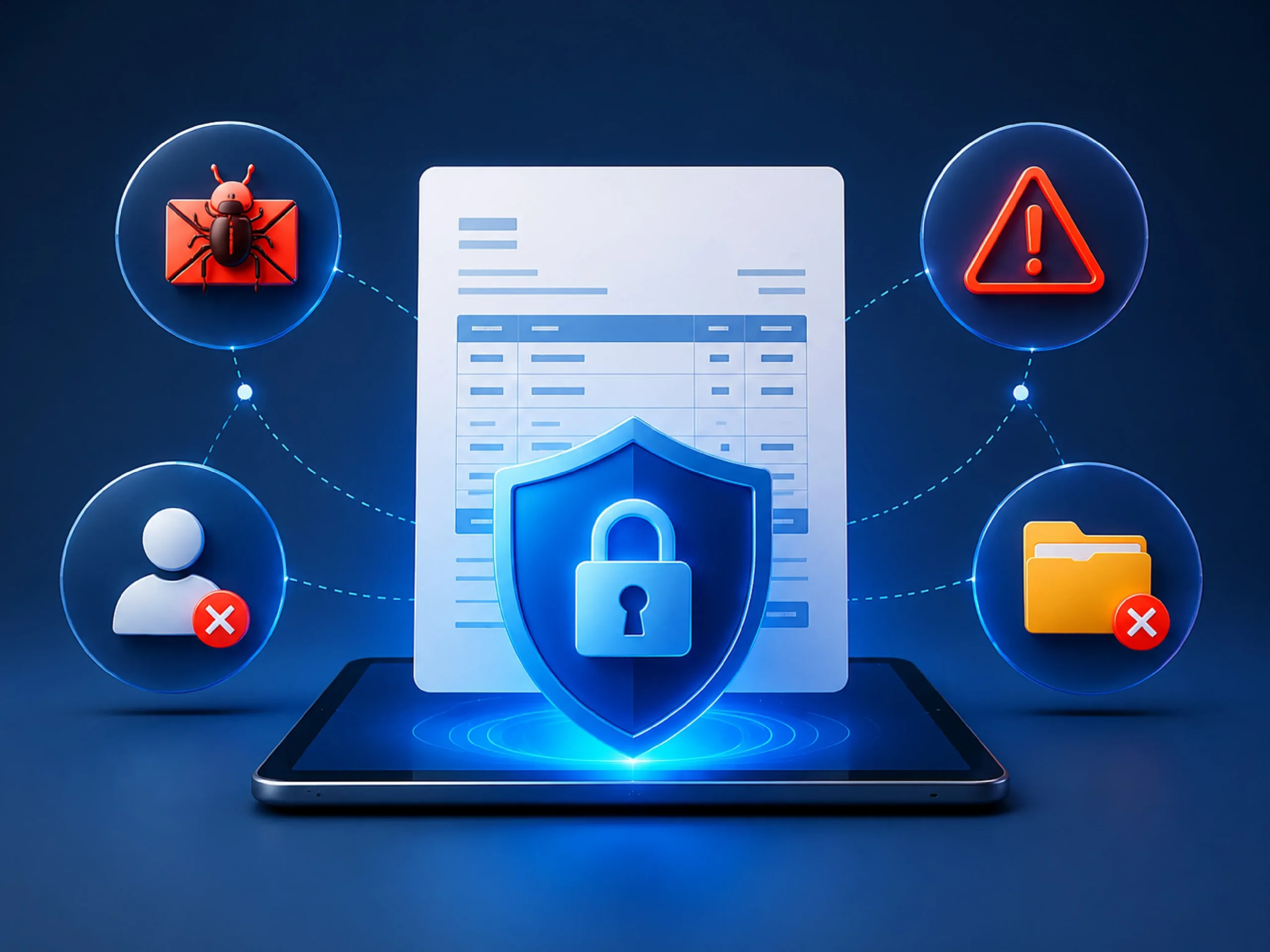
As businesses continue to embrace digital transformation, electronic invoicing has become an essential part of modern financial operations. E-Invoicing Security Risks awareness is increasingly being embraced as more and more digital billing systems are being used. As rapidly spreads E-invoicing in Saudi Arabia organizations are handling massive amounts of sensitive financial information electronically and therefore the security issue is a high business priority.
Digital invoices are more efficient, accurate and more compliant to the regulations, though they also give rise to new vulnerabilities. Fraud, hacking, unauthorized access and data breaches may reveal trade secrets of business and cause havoc. Firms should be aware of these emerging risks and put up formidable security to safeguard their financial information. Quickdice serves to ensure that organizations enhance the invoice security and at the same time ensure that business processes are seamless, compliant and efficient.
E-invoicing security can be defined as the technologies, policies and procedures that are applied to safeguard electronic invoices and other financial data against unauthorized access, alteration, theft or cyberattacks. Invoices are usually targeted by the criminals due to the presence of valuable business information in an invoice that the criminal may be interested in to gain a form of money.
Some of the most important information that should be ensured protection is the invoice details, the customer and vendor records, payment information, tax records and transaction histories. Lack of strong security can lead to loss of finances, breaking of regulations, legal action as well as great loss of reputation of a company. Effective security measures will aid companies in keeping their trust, keeping up with their regulations and safeguard key financial processes against the challenges of emerging threats.
Amongst the most severe E-Invoicing Security Risks are fraud invoices that are developed by cybercriminals. Attackers can manipulate payment information, claim to be valid vendors or provide fraudulent invoices that seem to be legitimate. Such frauds may cause a lot of losses in terms of money and broken business relations in case of sending money to the fraudulent accounts.
Prevention Tips
The other significant type of E-Invoicing Security risks is phishing email that pretends to be an invoice or a payment request. Attackers will fake email addresses, use malicious attachments and deceptive links to lure employees to provide credentials or malware. Finance and accounting teams are also the victims of these attacks as they have access to payment systems.
Prevention Tips
With the digitization of financial records in organizations there are high E-Invoicing Security Risks of unauthorized access and data breach. Sensitive customer information, payment records and tax data can be disclosed due to weak passwords and lack of proper access controls and insider threats. An effective breach can lead to the violation of the compliance and loss of customer trust.
Prevention Tips
Delivering malware and ransomware attacks can be done using invoice documents. Hackers tend to dress malicious files as authoritative bills and enticing workers to download and open infected files. Malware can steal information, encrypt vital files and disrupt business processes once activated.
Prevention Tips
E-invoicing systems are combined with accounting solutions and ERP systems as well as cloud solutions by many businesses. Although these integrations enhance efficiency they also make more attack surfaces. The sensitive financial information is also at risk of being exposed to cyber threats due to vulnerabilities in APIs or third-party applications or cloud environments.
Prevention Tips
The non observation of e-invoicing rules may cause operation and financial difficulties. Ineffective records of invoices and incomplete documentation and bad record retention habits can lead to audit, penalties and legal hassles. There is a constant change in the nature of regulatory requirements and as such compliance is a continuous process.
Prevention Tips
The initial protection against unauthorized access is a strong authentication. Multi-factor authentication involves either using passwords alongside other authentication procedures like using mobile authentication apps, security tokens or biometric verification. This will go a long way in ensuring that there is minimal risk of accounts being compromised and unauthorized transactions.
Encryption helps to secure information in invoices both on their way and when stored in databases or the cloud. Although attackers may intercept encrypted data, they will not be able to access the contents of the encrypted data without appropriate decryption keys. The encryption is necessary in order to secure the financial records, customer information and payment details.
Constant surveillance enables one to detect potential suspicious activity before it can cause a lot of harm. The companies are advised to monitor the invoice approvals, payment modifications, logins, and suspicious transaction patterns. Automated monitoring devices can give real-time notification upon detection of anomalies thus allowing quick response of an incident.
Verification is done manually, and is time-consuming and subject to human error. The automated verification systems match invoice information with the purchase orders, vendor record and payment information. This assists in detecting discrepancies, fraud cases and enhances general accuracy of invoices.
Employees will continue to be as crucial an aspect of any cybersecurity strategy. Consistent security awareness training will assist the staff to identify phishing and suspicious invoices, social engineering tricks, and other cyber threats. Employees with the appropriate level of training would not be prone to attacks that are aimed at financial processes.
The choice of the appropriate e-invoicing software is important to secure the business data and make sure that it complies with the regulations. Organizations ought to consider the security capabilities and compliance features of a solution together with its reputation of vendors before selecting a solution.
Security Checklist for E-Invoicing Software
Companies must critically evaluate the security infrastructure of the individual vendors and their willingness to continue enhancing cybersecurity. Not only does a secure solution safeguard sensitive information but also assists in ensuring continuity of operations and regulations.
As businesses continue adopting digital financial processes understanding and addressing E-Invoicing Security Risks becomes increasingly important. Cybercrimes like invoice fraud, phishing, data breach, ransomware, third-party vulnerability and compliance lapses can cause serious consequences to a business in terms of business operations, finances and reputation unless they are managed.
Organizations have to work proactively by applying effective authentication, encryptions, staff education, tracking of transactions and applying secure software applications. With security as a priority and the best practices in the industry businesses should not be hesitant to adopt digital invoicing and keep sensitive financial data undisclosed without facing threats to their ability to survive in the long term.
Most prevalent types of risks are invoice fraud, phishing actions, breach of data, ransomware attacks, vulnerability of third parties and regulatory compliance risks.
Some ways that businesses can prevent fraud include vetting of vendors, approval processes, verifying payments and tracking invoice processes.
Yes, with a proper encryption authentication and access control in place e-invoicing can be considered safer and more efficient than paper invoicing.
Secure e-invoicing software must have encryption, multi-factor authentication, audit trails, compliance, fraud detection, secure integrations and regular security updates.