

In today’s competitive business environment companies require instant access to financial information to make faster and smarter decisions. Real-Time Financial Tracking assists organisations to track transactions, expenses, revenues and cash flow in real time enabling leaders to make quicker and more intelligent decisions. Companies which operate modern digital finance systems are more able to have greater control over their operations and have a more in-depth visibility within their departments.
Modern companies in the Middle East are increasingly adopting accounting erp in Saudi Arabia to improve financial transparency and automate reporting processes. Conventional financial reporting systems are known to have delays, manualization and a lack of visibility of business performance. Real-time systems can be used to eliminate such gaps by giving access to updated financial information in real-time, enhancing efficiency, compliance and long term business planning.
Real-Time Financial Tracking can be defined as real time monitoring of financial transactions, expenses, revenues and cash flow. It enables companies to have current financial data in real time enhancing visibility, control over operations, accuracy in reporting and overall decision making in the organization.
Real-time reporting gives up to date financial information as soon as transactions are made whereas periodic reporting generates financial information weekly, monthly or quarterly. Real-time systems are responsive, minimize delays, enhance visibility and help in proactive decision-making as opposed to conventional reporting systems.
Correct financial information is essential to make critical decisions in businesses. Real-Time Financial Tracking is an immediate access to the updated financial reports which allows leaders to react promptly to the functioning problems, market changes and customer needs. The rapidity of decision making enhances profitability, reduces uncertainty as well as facilitates optimal strategic planning between departments.
Instant financial updates allow companies to have a better control of incoming and outgoing cash. The real time monitoring assists organizations to avoid shortages of cash, effective payments, working capital optimization and greater financial stability in the course of activities.
Financial systems in real-time enhance team work since they deliver uniform financial data in different departments. Teams obtain the right information in real-time, eliminate communication disconnects, enhance accountability and align all the business units to the financial goals and business performance targets of the organization.
Live monitoring can alert organizations about any unusual transactions, financial irregularities and operational risks in real time. Early detection assists businesses in taking corrective action early enough, reduce losses, enhance internal controls and have a better financial security and compliance standards.
Live tracking enhances the accuracy of records and uniformity of documentation when auditing and required by the regulations. Companies have a structured financial documentation, ease of compliance reporting, minimize mistakes in manuals and enhance the level of preparedness to internal audits, external reviews and financial checks.
Organizations that use old-fashioned systems are usually characterized by delays in reporting, which diminishes efficiency in making decisions. Important financial information can be available too late which makes the management find it difficult to react to financial changes, operational issues and market variations.
The manual accounting means that there is a high possibility of multiple entries, calculation errors and inconsistency in financial records. In the absence of automated real-time systems, business might have inaccurate reporting, compliance issues as well as ineffective operations that have adverse financial performance impact.
Organizations that lack real-time visibility might not be able to keep a track of any expenses, receivables and payment schedule. Lack of financial control may result in cash crunch, late payments to the vendors, budgeting issues and challenges of sustaining normal business operations.
The use of late financial information affects the quality of financial forecasts and budgets. The wrong financial assumptions made by businesses, poor allocation of resources and missing strategic opportunities may occur due to the fact that the decision is made on an outdated or incomplete financial data.
The executives need real-time access to financial performance indicators in order to use them as a guide to business strategies. Lack of real time tracking means that the leadership teams will not have a visibility of the performance of the department, its operational costs and profit trends that can be used to plan and grow effectively.
Current ERP systems are a consolidated financial system through accounting, procurement, inventory, payroll and reporting systems as the basis of one platform. Through these systems, instant data synchronization is achieved, increases the visibility of operations and enables proper financial management throughout all departments.
Cloud computing accounting services can be accessed anywhere in real time allowing businesses to get financial data. These systems enhance cooperation, automate updates, enhance data security and eliminate reliance on manually-generated financial reporting systems and physical infrastructure.
Invoices, payments, payroll and reconciliations are automated and will be processed in real-time without any human intervention. Automation can help in eliminating delays in processing, enhance transaction accuracy, minimize the administrative workload and promote faster financial reporting and operational efficiency.
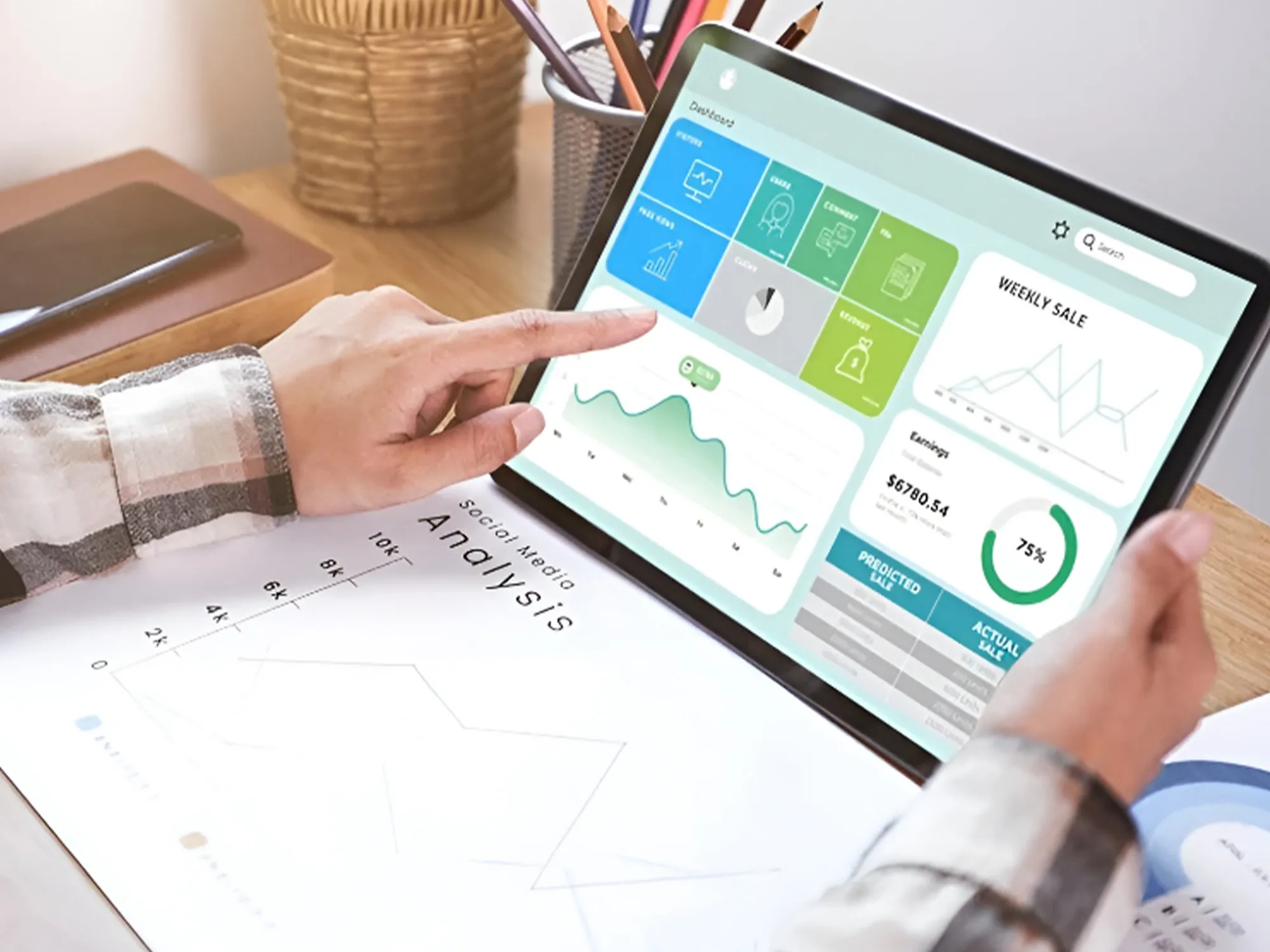
AI is improving the financial analysis process by detecting patterns and trends and producing actionable information automatically. The AI dashboards offer real-time visual reporting which business can use to monitor performance, tone risks and enhance strategic financial planning.
Live financial insights help businesses pinpoint unnecessary costs, track profit margins and more efficiently spend money. Real-time visibility enhances more effective cost management strategies that enhance profitability and efficiency in business operations.
Real-time systems are automated thereby decreasing the time taken to complete the reconciliations and month end reporting. Finance departments are able to close accounts quicker, enhance accuracy in reporting and devote extra time in the strategic planning and financial analysis processes.
Continuous updated financial information enables organizations to come up with more accurate forecasts. Real-time insights can assist the leadership teams to assess the market situation, anticipate future performance, use resources effectively and enable them to support sustainable long-term business growth plans.
Ongoing monitoring assists companies to detect suspicious activities, abnormal transactions and compliance breaches within a short period of time. Real time systems enhance fraud prevention measures, internal controls and minimise financial risks related to late reporting and manual controls.
Integrated financial systems help to remove manual repetitive work and enhance the automation of work. Employees are able to concentrate on more valuable tasks as businesses are able to experience quicker processes, enhanced productivity, enhanced cooperation and enhanced functional performance in other departments.
The accounting, payroll, procurement and inventory systems should be consolidated into a single platform in businesses. Integrated systems enhance uniformity of data, remove data duplication, increase the visibility of operations and facilitate complete and precise real-time financial reporting within the organization.
Automation helps to minimize the number of individuals working manually and enhances financial accuracy. Automated reconciliation and transaction processing systems must be implemented in businesses to reduce errors, speed up the reporting process and ensure a steady set of financial records within the departments.
Companies need to educate finance professionals to operate with the current financial technologies. Experienced workers are able to ensure maximum use of system functionality, enhance accuracy of reporting, enhance data analysis and enhance successful practice of real-time financial management.
Business companies are advised to keep track of the most significant financial KPIs which include cash flow, profitability, expenses and revenue growth. Consistent analysis assists organizations to discover trends in performance, solve financial issues on the spot and assist positive strategic decision-making activities.
Good governance policies aid in ensuring that there is correct and safe financial information. The following data validation procedures, access controls, compliance standards and auditing processes should be put in place by businesses in order to enhance trust, reliability and transparency in the financial systems.
To stay competitive and operationally efficient, modern businesses need to have quick access to correct financial data. Real-Time Financial Tracking enhances transparency, boosts decision-making and assists companies to react swiftly to financial difficulties and market dynamics. Companies that embrace automated finance solutions enjoy enhanced transparency, enhanced compliance and enhanced operational performance within the company.
Such businesses as Quickdice illustrate the role of integrated financial systems along with automation technologies in the long-term development of the business. Investing in new financial tracking solutions enables organizations to become more agile, minimize risks, enhance efficiency and uphold a better financial control in an ever data-driven business landscape.
It is the process of tracking and updating financial transactions in real-time as transactions take place in business systems.
It enhances financial transparency, accelerates decision making, enhances cash flow management and lessens reporting time and inaccuracies.
Instant insights assist companies to monitor receivables, expenses and payments in real-time to have a better control over finances.
Yes, the current ERP systems have combined departments and made available updated financial information in across operations.
Businesses have the risk to experience delays in reporting, inaccurate data, inadequate cash flow management and operational risks.
Yes, SMEs will enjoy a better visibility, improved budgeting, quicker reporting and enhanced operational efficiency.
Real-time financial information enables leaders to review performance in a short period and make sound strategic business decisions.