


Digital Record-Keeping KSA has become a fundamental aspect of a business that intends to remain competitive and compliant in the ever-changing business environment today. Companies in Saudi Arabia are gradually embracing new technology such as accounting software in Saudi Arabia to facilitate their financial operations and keep proper records. Quickdice solutions, among others are also assisting firms in switching to the traditional systems to effective digital systems.
The change towards the use of paper-based documentation to the use of digital systems is indicative of the increasing demand of accuracy, security and accessibility. Digital records are essential in ensuring that they comply with regulations, enhance efficiency and facilitate business continuity. With Saudi Arabia still in the process of digital transformation, the need to adopt systematic record-keeping practices has ceased to be an option but a requirement to ensure sustainable growth.
Digital record-keeping is the process of electronically storing, handling and organizing business information through the use of software. It substitutes the traditional paper files with electronic ones, which can be accessed quicker and be more precise. Companies are able to safely store information, access documents in real time and make sure that they are in compliance with the rules and regulations and to minimize the number of errors and administration expenses.
The use of manual records is based on the storage of paper-based records which is time consuming and may be lost or misplaced. However, with digital systems, automation, superior organization, and increased security are available. Digital record-keeping is a more effective and reliable solution to businesses due to its real-time access, enhanced collaboration, and the decreased cost of storage.
Electronic record-keeping makes sure that businesses comply with Saudi regulations, such as VAT and e-invoicing regulations. Adequate documentation can prevent penalties and ease audits. A good digital record keeping enables organizations to effectively adhere to government policies and show transparency and accountability in their financial reporting practices.
Digital systems minimize human errors in data entry which are related to manual data entry and also provide uniformity of records. Businesses are able to get the important information at any time, any place, enhancing the decision making processes. The increased accessibility also allows the teams to work in an efficient manner, so that the necessary data would always be available whenever necessary.
Under digital records, the businesses will be able to create reports immediately and present the auditors with structured data. This accelerates the audit process and minimizes delays that are occasioned by non-availability or incompleteness of documentation. Automation of reporting also leads to increased efficiency since the companies can concentrate on strategic operations as opposed to administrative work.
Digital record-keeping enhances transparency of the business activities and managers are able to track the financial and operational data. It provides improved control over processes, minimizes risks of fraud and increases accountability. Open records management fosters confidence in the stakeholders and aids in informed decision-making.
Data storage is centralized to have all business records stored in one system and in a well-arranged system. This will lead to less duplication, better accessibility and departmental collaboration. Digital Record-Keeping KSA is even more effective when the businesses are implemented on centralized platforms that allow seeing all records in one place.
Sensitive business data are safeguarded by secure access controls against unauthorized access. Businesses can also control access by the user through user roles and permissions which will ensure that specific records will not be viewed or edited by unauthorized personnel. The practice enhances data security and assists in keeping up with privacy regulations.
Data entry should be consistent in order to keep accurate records. Setting up standardized format and procedures provides uniformity in all records. This minimizes errors, enhances the quality of data and simplifies retrieval and analysis of the information as needed.
Periodic data backup helps companies to avoid losing data in case of technical failures or cyber threats. By having a disaster recovery plan in place, important information is able to be reinstated within no time. The practice protects business continuity and reduces business interruptions.
The version control is used to monitor the changes to the documents as they are done over time so as to avoid confusion and inconsistency of data. It makes sure that the employees are continuously using the latest version of records. This will enhance cooperation and minimize the possibility of mistakes that may arise due to the use of information that is not up to date.
Enterprise Resource Planning systems incorporate different functions of the business in one system and enhance efficiency in managing records. Document management systems also help in increasing the organizational level by categorizing and storing files in an organized manner. They combine to streamline the workflows and provide the right and real-time data availability across departments.
Cloud storage provides businesses with the ability to store data in a secure manner and have access to it remotely. It will minimize the amount of physical storage infrastructure required and guarantee the availability of data wherever it is needed. Scalability is another advantage of cloud solutions as business can increase storage capacity when they are required without a substantial investment.
Automation makes record-keeping easier as it creates and classifies records automatically. This saves on manual work and errors are minimized. Automated systems also guarantee uniformity in records management and save time and enhance efficiency in businesses that deal with massive amounts of data.
The combination of record-keeping systems and accounting and compliance tools will allow the free flow of data between platforms. This enhances precision in the financial reporting and ease the compliance with regulations. Businesses are able to keep all their records effectively as well as minimizing the duplication and manual data entry.
The Saudi Arabia businesses are obliged to adhere to particular record retention policies, which provide that documents should be kept during the necessary period. Correct retention practices can assist organizations to fulfill legal requirements and evade fines. Audits and the need to refer to the records later are also assisted by keeping records at the right time.
The Saudi laws have stipulated that companies should keep correct VAT and e-invoicing records electronically. Correct documentation will make it comply with the tax laws and will make the process of reporting easier. Digital systems assist businesses to effectively manage invoices and minimize mistakes and submit invoices on time.
Having well-structured and correct digital records will make it audit-ready at any time. When making inspections businesses are able to present the necessary documents fast. The use of standardized documenting practices enhances transparency and facilitates the process of auditing without delays and complications.
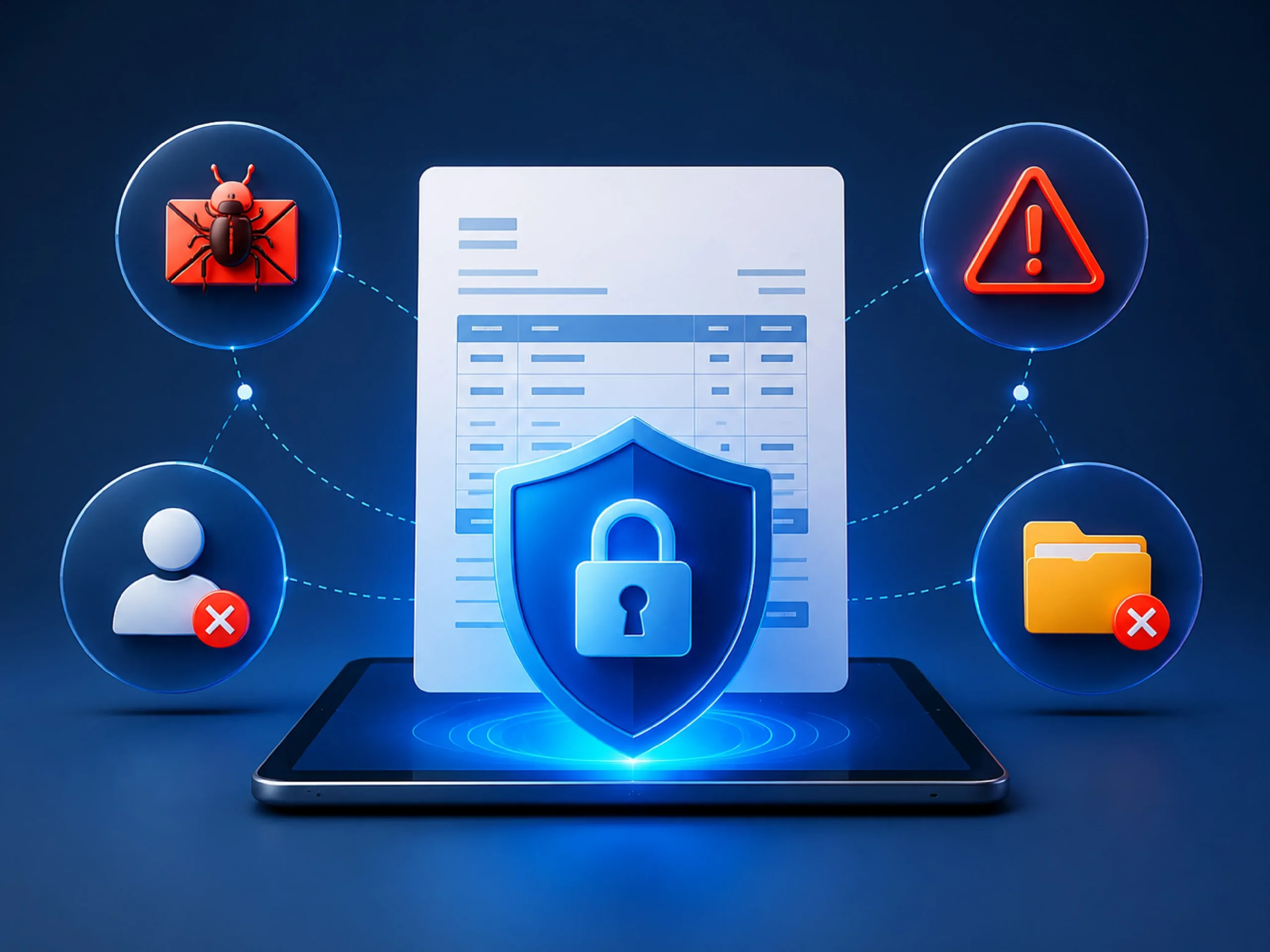
One of the key challenges of digital record keeping is protecting sensitive business information. Information can be compromised due to cyber threats and unauthorized access. To ensure that their data is not compromised and continues to build trust among stakeholders businesses should apply high levels of security i.e. encryption and access controls.
The shift to digital systems instead of paper-based systems may be cumbersome and time consuming. It involves adequate planning, data structuring and implementation of systems. Companies might have a problem in the process of digitizing the available records and maintaining accuracy of the data in the process of migration.
The staff might be opposed to the implementation of new digital systems because they are not acquainted with them or have not been trained. Adequate guidance and support will be needed to facilitate easy adoption. Companies need to invest in training to enable employees to learn how to use and use digital record keeping tools.
When dealing with significant volumes of digital data, it can be daunting without the necessary systems in place. Any business requires effective storage and management solutions to store records effectively. The introduction of scalable systems assists in controlling the increase in data and in the absence of problems in operations.
Businesses ought to consider their current record-keeping methods before switching to digital systems. Determining the gaps and inefficiencies can assist in choosing the appropriate solutions. Well-informed knowledge of the current processes will facilitate an easier process to digital record management.
The choice of the appropriate tools is an important part of successful digital record-keeping. The solutions adopted by businesses should be scalable, secure and in line with Saudi regulations. This provides durability and sustainability of the system and helps in business expansion without the need to change the system regularly.
Digital implementation can only be successful with employee training. Giving clear instructions and constant support will help make sure that staff will be able to use the tools effectively. Professional employees help in proper and effective record keeping.
Periodic audits can be used to find out problems and maintain effective record-keeping practices. Reviews of the system enable businesses to revise the processes and enhance efficiency. The active control guarantees the adherence and assists in keeping the data management at a high level.
Digital Record-Keeping KSA is a crucial factor in assisting businesses to become efficient, compliant and secure in data. Switching to digital systems may help organizations to simplify operations, minimize errors, and have a better control of their records. Best practices are to be properly implemented to increase transparency, and long-term business success.
Implementation of technology-oriented and structured record management practices is critical to businesses that want to succeed in the changing digital environment of Saudi Arabia. Having the right tools strategies and training companies can unleash the potential of digital record-keeping and create a solid base of sustainable growth and innovation.
Electronic storage and management of business data is known as digital record-keeping, which assists in the enhancement of accuracy, accessibility, compliance and overall efficiency in operations.
Companies are recommended to keep financial data, bills, employee information, contracts and legal papers in digital format to organize them and make them compliant.
The time of records retention can be different, although the majority of financial and tax records should be stored during the years to meet the Saudi regulations.
Yes, the cloud systems provide high security measures such as encryption and access controls, allowing safe and reliable data storage.
ERP systems consolidate information automate operations and merge business practices and enhance efficiency and accuracy in record management.
Some of the challenges that are common are data security risks, system migration issues, employee resistance and effective management of large amounts of data.
Small businesses can begin by selecting low-cost tools, employee training and a slow shift to manual to digital processes.





Comments are closed