

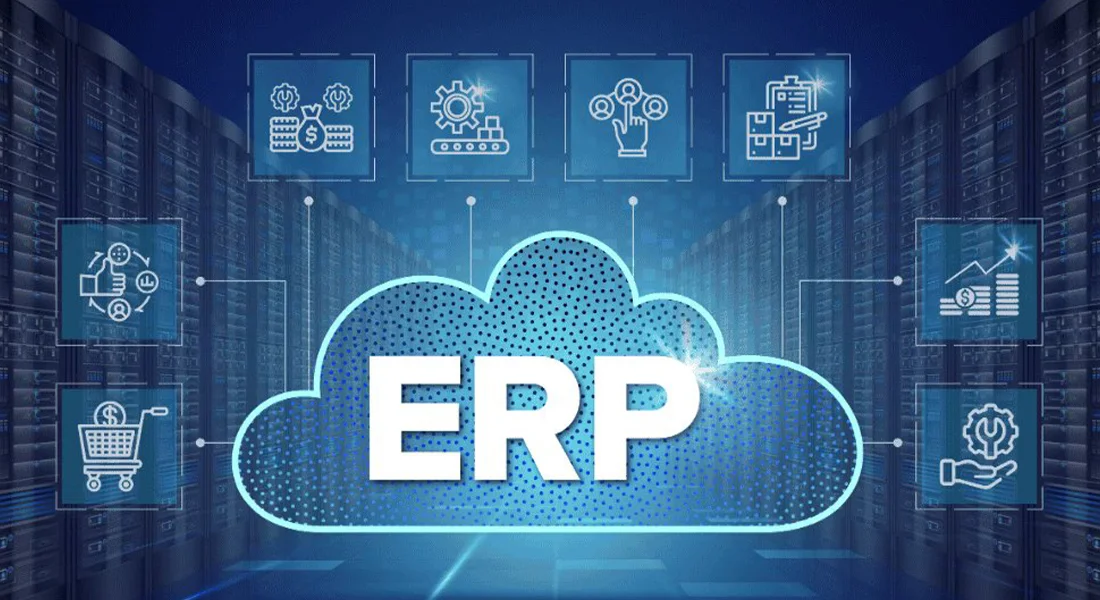
The ability to exchange data among the modules of ERP systems is an essential aspect of the contemporary company that is based on the interconnected digital workflow. There is an unending data exchange among a finance, human resources, supply chain, manufacturing, and customer management modules in an ERP ecosystem. This information needs to be shared in a secure way in order to safeguard confidential business and personal data.
Secure data sharing is important because it ensures data confidentiality, data integrity, and data accuracy are maintained within interconnected modules. Unsecured inter-module data flow exposes organizations to the risks of unauthorized access, data corruption, system downtime and cascading failures that may affect multiple departments simultaneously. Such risks do not only endanger efficiency in operations but can also lead to losses of finances and funds as well as reputations.
Data sharing shows how to ensure compliance with regulation and business continuity of secure data sharing through controlling access, encryption, auditing, and traceability of data. These safeguards help organizations meet regulatory requirements while ensuring uninterrupted operations, making security a key factor when choosing the best erp system in Saudi Arabia for sustainable and compliant growth.
Enterprise resource planning systems consist of several modules, all of which are set to control a particular business area but work in an integrated environment. The typical ERP modules are in the fields of finance, human resources (HR), supply chain management, customer relationship management (CRM), and manufacturing. The finance module captures accounting, budgeting and reporting; the HR manages employee records and payroll; the supply chain deals with procurement and logistics; CRM deals with customer interactions; and the manufacturing assists in production planning and inventory management.
These modules have a very close relationship with each other though they have a different purpose. Information circulates throughout the modules of ERP in order to facilitate end-to-end business. To take a few instances, HR payroll information feeds finance where salaries are processed, sales orders in CRM where inventory updates in supply chain and production data in manufacturing hence financial forecasting. This interrelated flow of data eradicates silos and makes the organization uniform.
Continuous exchange of data is a vital element of operational efficiency. When the ERP modules interact harmoniously, organizations are in a position to enjoy the benefits of real-time insights, expedited decision making, decreased data replication and enhanced communication across departments. Any type of interference or deviation in data sharing will make the operations slow, add errors, and deter in the merits of the ERP system.
Secure data sharing in ERP systems is defined as the controlled and secure sharing of information among modules of ERP, between ERP and users as well as ERP and integrated systems of information exchange. It makes sure that only the right parties can access data, it is correct upon transfer and accessible when required. The ERP Secure Data Sharing is not just about the connectivity but also about protecting sensitive personal and business information by the lifecycle.
There is a major difference between a secure data exchange and data integration. Data integration focuses on linking systems and facilitating data flow, and usually functionality and performance are prioritized. Secure data exchange, conversely, includes security technology like encryption, authentication, authorization and monitoring to secure data transmission and access.
The main purposes of protection data sharing are similar to the CIA triad:
The combination of these principles is the basis of a safe and stable ERP environment.
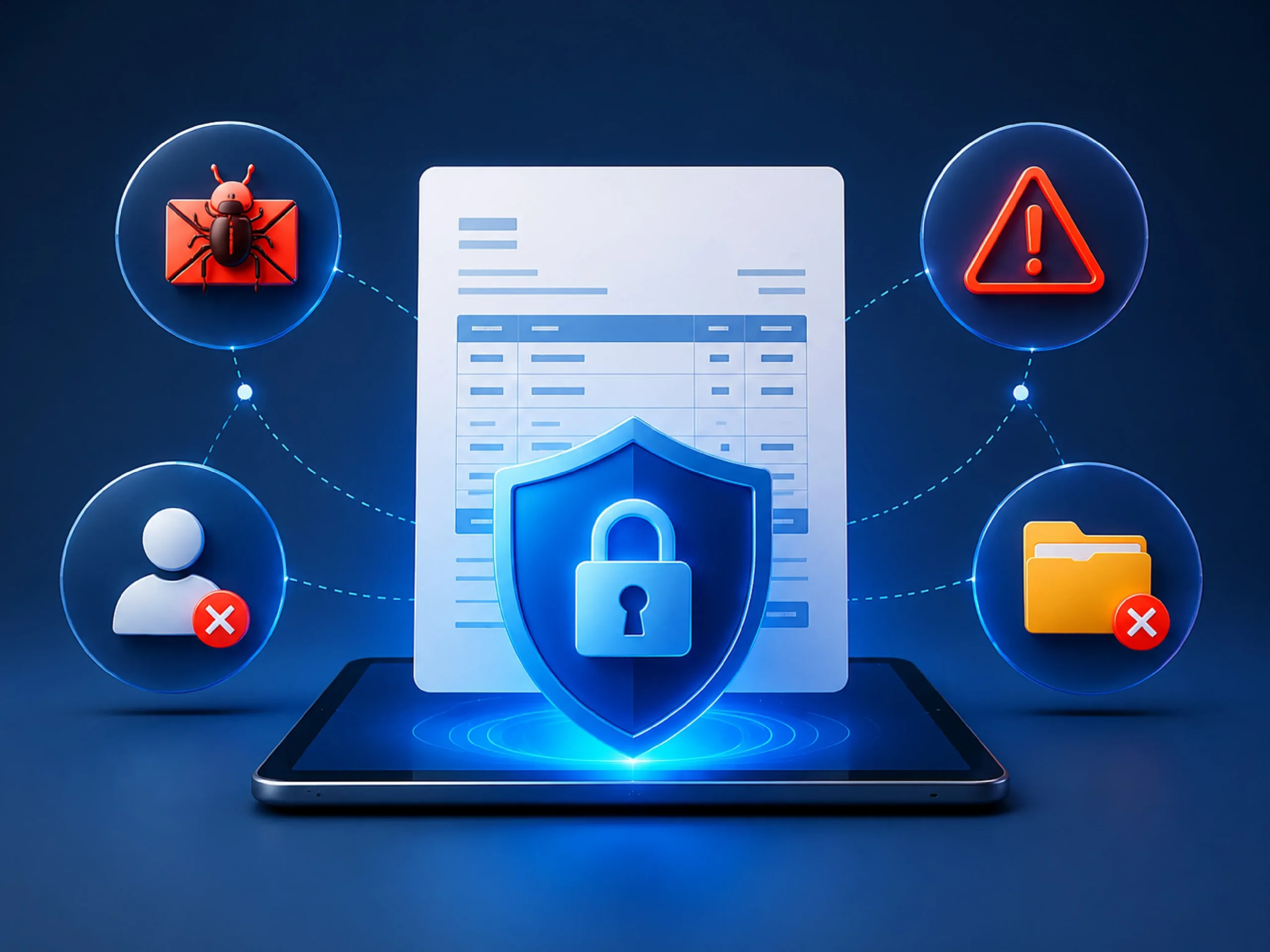
ERP systems have a number of security risks associated with data sharing despite the advantages they have. High-risk One of the risks is the possibility of unauthorized inter-module access, where a user or processes are given too much access, leading them to access the data they should not have.
Leakage of data and internal threats are also a big challenge. Sensitive data may be either accidentally or deliberately withheld by employees, contractors or hacked internal accounts without proper controls and monitoring.
Lack of coherent access controls between modules is another general problem. The difference in security policies among the components of ERP makes attackers use easier modules to access more sensitive parts of the system.
Lastly, integration security and API poor security might expose ERP to outside attacks. Inter-module or third-party integrations may result in the attacker intercepting or altering data due to weak authentication, absence of encryption or unmonitored interfaces.
Effective and reliable ERP environments are based on secure data sharing. Due to the integration of various business functionalities in ERP systems, it is important to have robust security principles to protect the flow of information within the modules without subjecting sensitive information to the outside community. The deployment of these principles facilitates the Secure Data Sharing in ERP as well as safeguards the organizational resources and uphold regulatory standards.
One of the most important security mechanisms in the ERP systems is Role-Based Access Control (RBAC). It restricts access to information depending on the established job roles and duties so that the user is only able to access or make changes to information required to the job. As an example, the financial records accessed by the finance personnel cannot be viewed by the HR staff whereas the employee data cannot be accessed by the employee.
RBAC decreases the attack surface by role-based access control capabilities and non-malicious data exposure. It is also crucial in avoiding escalations of privilege whereby users can be granted the higher level of access than desired. Most of the time role reviews and least-privilege enforcement can be used to maintain a high security boundary between ERP modules.
To protect sensitive information, data encryption is necessary in all its lifecycle. ERP systems are expected to encrypt data at rest (when it is stored in databases or in backups) and when it is transferred between modules or between external systems. The encryption will make sure that in case of data being intercepted or accessed without the permission of the person; it will not be readable or useful.
Of great significance is secure key management. The keys to encryptions should be saved, rotated and secured by secure key management systems. These challenges render the issue of key governance a crucial element of the Secure Data Sharing in the ERP settings, even when the encryption is done properly.
ERP data is secured by strong authentication and authorization measures, which are used to verify the users and systems that are allowed to access the data. Multi-factor authentication (MFA) provides an extra security measure to the passwords, as it entails more verification mechanisms, which would greatly decrease the chances of the account being compromised.
Single sign-on (SSO) will also improve both security and usability where a user can authenticate and have access to various modules of the ERP systems in a secure manner. SSO eradicates password exhaustion, enhances user experience and can be used to provide a centralized access control, which simplifies the implementation of uniform security policies throughout the ERP ecosystem.
Audit trail and logging allow tracing the access, sharing, and manipulation of data in ERP modules. Monitoring the user activities, system events, and data changes, organizations can easily identify suspicious behaviour and react quickly to possible threats.
Such logs will be critical to the forensic examination process and help the security team to examine the incident and determine the root causes. Also, audit trails facilitate the compliance with the regulations as they offer data governance, enforced access control, and responsibility evidence. Extensive monitoring makes it transparent and makes the process of Secure Data Sharing in ERP systems more trustworthy.
Protected ways of integration are also important in ensuring that communication between ERP modules is reliable and safe. Since organizations rely on systems that are interconnected, the selection of the appropriate integration method is a very important part in ensuring the attainment of the Secure Data Sharing in ERP systems.
Native ERP integrations are vendor-supplied connections that allow ERP vendors to exchange data among internal modules. These integrations often have inbuilt security measures like role-based access control, standardized authentication and standard data validation. The main advantage of the native integrations is high reliability and strong integration with the security design of the ERP. Nevertheless, they might be rigid with respect to their integration with third-party applications or the modification of multifaceted workflows.
The API based integrations have more flexibility, as they allow sharing of data between the ERP modules and the third-party systems. Authentication tokens, API gateways, and encryption should be used to secure APIs in order to achieve security. An abuse, denial-of-service attacks, and unauthorized access are prevented with the help of rate limiting and constant monitoring. With a proper security in place, APIs provide scalable and predictable data exchange among the ERP ecosystem.
The integration platforms and middleware are intermediaries which facilitate the data flow between the ERP modules and external systems. They facilitate securely orchestrated data, transformation, and validation in addition to centralized security policies. Middlewares promote visibility and governance through standardized controls and monitoring and therefore make middlewares a potent tool in ensuring Secure Data Sharing in ERP settings.
Smooth ERP operations are based on effective governance of data. Having clear data ownership and accountability would provide that particular individuals or teams are charged with the duty of overseeing, securing, and authorizing access to data through the ERP modules. This accountability will curb any misuse and will increase transparency in the handling of data.
Another important concern of ERP data governance is regulatory compliance. Regulations like the GDPR, HIPAA, SOX, and ISO 27001 have to be followed by the organization, depending on their industry and other geographical presence. The ERP systems can achieve compliance through the use of the Secure Data Sharing that will ensure access controls are in place, auditing logs are maintained and that the privacy of data is secured. Also, data classification and retention policies can assist organizations to decide on how data must be stored, protected and disposed to minimize legal and operational risk.
Best practices are also utilized to enhance the security of ERP and to provide good security to all the modules that are linked together. Among them is that access controls must be standardized in all the ERP modules to avoid security holes. This uniformity eliminates the possibility of attackers using weak modules to get access to sensitive information.
The principle of least privilege should be applied to make sure that the user and systems have the minimum desired access to do what they do. It is also necessary to update and patch ERP systems frequently because unpatched vulnerabilities are one of the most popular ways to enter the network.
Periodic security audit and penetration testing also should be undertaken by organizations to discover the vulnerability of inter-module data flow. Lastly, employee awareness programs on training and data security are used to mitigate human error, which is among the major culprits of data breaches in the ERP environment.
Safety in sharing data brings about immense benefits to business and operations. Among the positive aspects, the better cross-functional collaboration can be identified because the teams are able to retrieve accurate and timely data without being worried about security. This openness also increases the coordination among the departments like finance, HR, supply chain and manufacturing.
Secure Data Sharing in ERP also results in less security occurrence and compliance risk since it ensures fewer unauthorized access and data exposure. Constant validation and controlled access leads to enhanced accuracy and trust of data, and better decision-making and reporting. Moreover, an ERP with a secure environment also facilitates scalable and future-proof architecture which allows organizations to add new modules and technologies without jeopardizing on security.
Regardless of the advantages, there are various obstacles in the process of ERP data sharing in terms of security. Large ERP environments are complex environments, which are hard to control access controls, integrations, and security policies throughout all modules.
The problem of integrating old systems also acts as a barrier to security practices since some old systems might not support modern encryption, authentication and monitoring. Companies should also find a balance between usability and security, that powerful controls should not be used to the detriment of productivity and user experience. This balance needs to be attained via proper planning, automation, and constant optimization.
ERP security strategies are also developing as threats are changing. Zero Trust architecture is also becoming a trend in ERP environments where users, devices, and systems constantly need to be verified and approved before access is granted. This will decrease the implicit trust and restrict the horizontal movement in the ERP worlds.
Another up-and-coming trend is AI based anomaly detection, where a machine learning application detects anomalous patterns of data access and possible threats, in real time. Also, blockchain technology is under investigation in terms of secure ERP data exchange, which will provide an immutable record and increased data integrity in the distributed system.
Cumulatively, these trends will enhance Secure Data Sharing in ERP systems, which will help organizations to safeguard vital data and foster innovation and expansion.
Share data in and out of ERP modules safely is necessary to create a strong, effective and reliable enterprise space. They need to include the application of role-based access control, the least privilege concept, encryption of data at rest and in transit, API and integration security, audit trail maintenance, and well-developed data governance practices. Consistent updates of the systems, the security audits, as well as employee awareness training, also contribute to enhancing the overall ERP security posture.
Long-term high-quality ERP security provides tremendous gains. They minimise the chance of breaches of data, guarantee regulatory adherence, raise the data correctness, and foster effective team work by permitting teams to depend on comparable and secure information. Secure ERP systems are also scalable and thus it is easier to implement new technologies and integrations without risking it. With the implementation of security policies and collaborating with reputable vendors of security solutions, such as Quickdice, organizations may obtain sustainable growth and continuity of their operations, as well as confidence in their ERP ecosystems.
What does secure data sharing mean in an ERP system?
Secure data sharing in all ERP system can be described as the secure and regulated data exchange between all the ERP modules, users, and integrated systems in order to ensure data confidentiality, integrity, and availability.
Why is secure data sharing important across ERP modules?
ERP data sharing is necessary to eliminate any unauthorized access, data leaks, and system-wide breaches and facilitate a free-flowing exchange between departments (finance, HR, supply chain, etc.).
How do ERP systems control access to shared data?
Role-based access control (RBAC), authorization policies and authentication mechanisms are used to implement data limitations on user roles and responsibilities in ERP systems.
What role do APIs play in ERP data sharing?
APIs allow the sharing of data with other ERP modules and with third-party systems and should be with authentication, encryption, and monitoring.
How does encryption protect ERP data?
Encryption also protects ERP data such that unauthorized users cannot read it during storage and transmission.
Which compliance standards affect ERP data sharing?
Other standards that usually affect the need to share ERP data include GDPR, HIPAA, SOX, and ISO 27001.
Can cloud-based ERP systems securely share data?
Insured, cloud-based ERP systems are capable of safely sharing data, with the right security measures.


Comments are closed